Small Hive Beetle Fact Sheet and New Bee IPM Videos
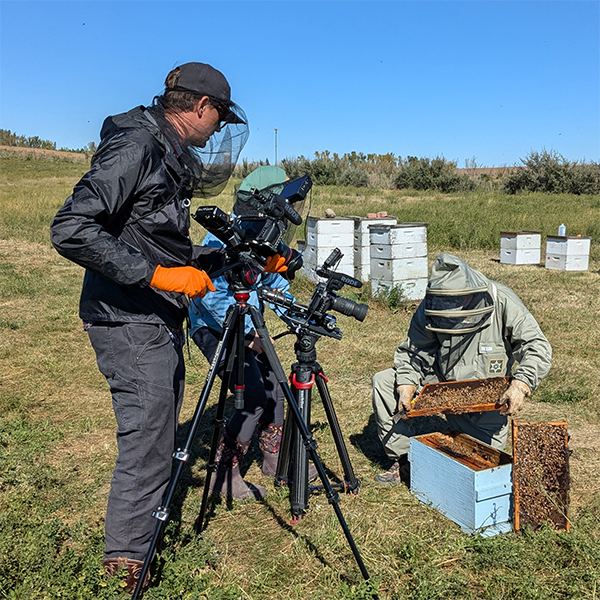
Honey Bee Health Specialist Brandon Hopkins and his team released A Guide to the Small Hive Beetle: An Emerging Pest in Washington State (PDF), an 8-page fact sheet that includes identification, potential damage, detection and monitoring, and prevention and control of this hive pest. Formerly of little concern in Washington, warmer weather is allowing the beetle to persist. Extension Coordinator Briana Price served as lead author on the fact sheet, joined by PhD Candidate Riley Reed, Assistant Professor Gengping Zhu, and Hopkins.
The team also released videos based on the Diagnostic Microscopy Training they conducted last spring at WSU Puyallup and WSU Mount Vernon Research and Extension Centers:
- Seminar: Microscopes, Nosema, and Tracheal Mites, Oh My! in English and Spanish
- How to Quantify Nosema Step-by-step in English and Spanish
Given that the majority of commercial apiary workers are native Spanish speakers, the team has begun work on a video series project called A.B.E.J.A.S. (Aprendizaje Básico y Experto en Jornadas Apícolas Sostenibles). “Abejas” is the Spanish word for bees. The 12 videos under development will be filmed in Spanish. The ABEJAS acronym translates to “Basic and Expert Learning in Sustainable Beekeeping.” Cooperators include Wonderstone Films, University of Minnesota’s Katie Lee, PhD Candidate Sandra Mina-Herrera, and Miller Honey Farms.
These Shrimp and Crab Are Pests in Aquaculture
Cranberry and Shellfish Extension Specialist Laura Kraft is new to the WSU Extension IPM Team this quarter. She serves the growers of these aquatic crops from the WSU Long Beach Research and Extension Unit.
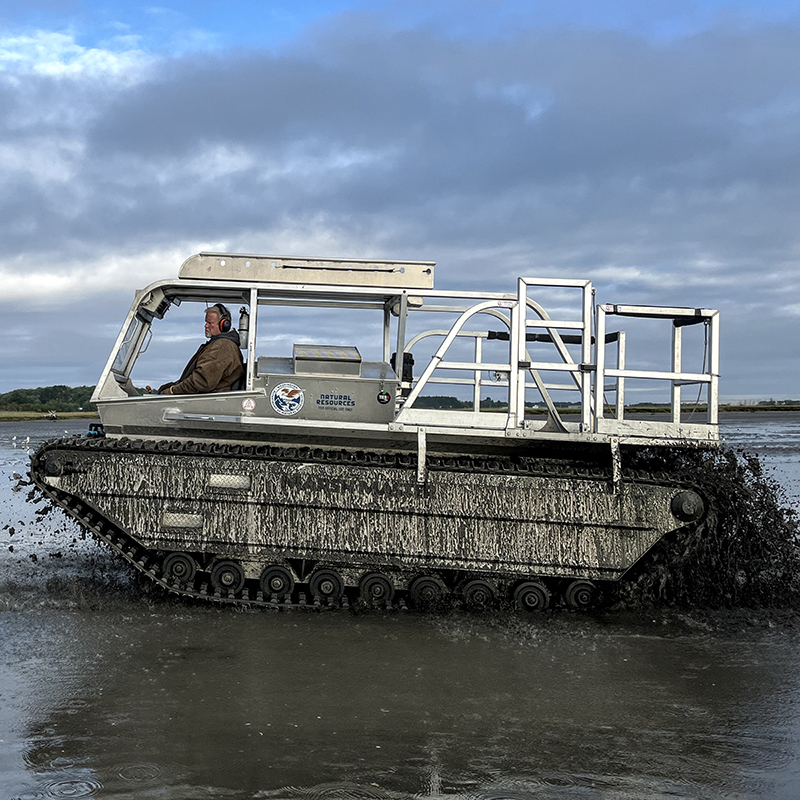
Shellfish was Washington State’s first export commodity, dating back to the 1800s, and it continues to be a major economic engine for the state today, especially for Washington’s economically challenged coastal counties. Washington is the nation’s #1 producer of shellfish aquaculture. Burrowing shrimp are a major pest to oyster rearing due to their ability to stir up sediment and effectively smother ground-cultured oysters. Pesticide use is no longer an option in the tideflats of Washington’s Willapa Bay, therefore a wide variety of other means have been investigated, including sediment disruption (see photo). In collaboration with Jennifer Ruesink and Haleh Mawson at the University of Washington, Kraft wrote Review of Past Mechanical Control Methods for Burrowing Shrimp Management, published in the September/October edition of Aquaculture North America magazine.
Kraft’s team also participated in a public open house hosted by Washington Department of Fish & Wildlife featuring their research updates for shellfish growers and European Green Crab (EGC) trappers. EGC, an invasive species, is another pest of aquaculture.
Forestry Stewardship Webinar and Tour Events
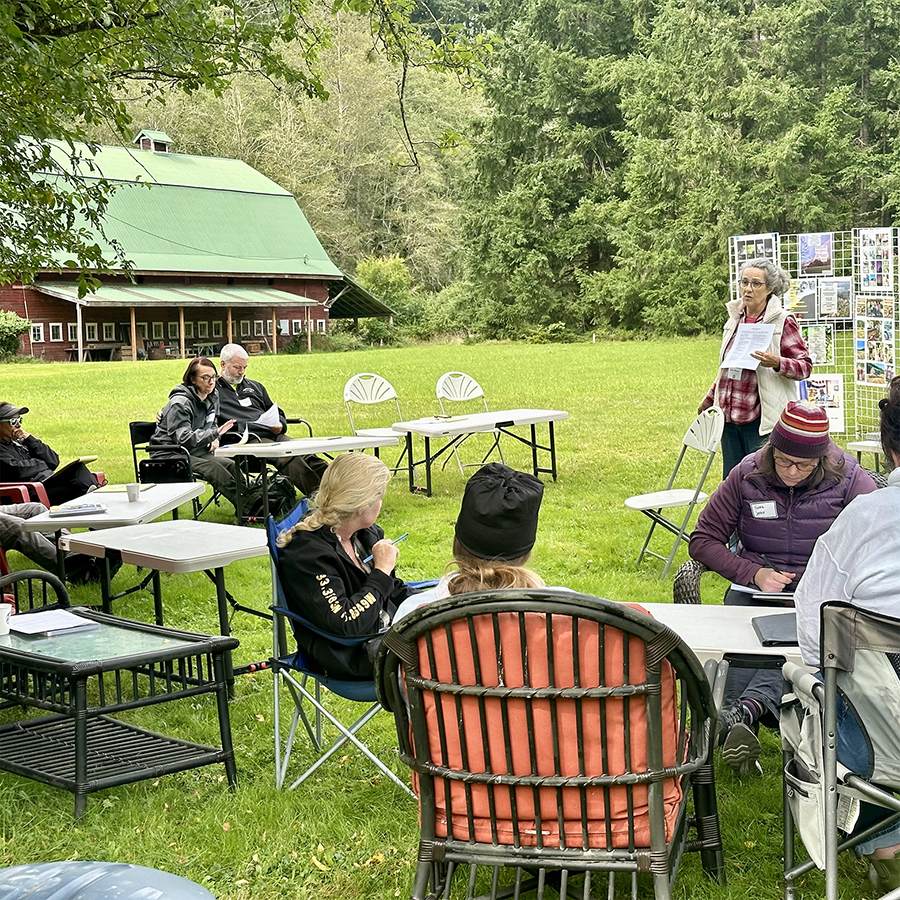
Forest Health Extension Specialist Molly Darr is new to the WSU Extension IPM Team this quarter. She advises northwestern Washington’s landowners on stewardship of their forest parcels, including integrated management of pests. Darr’s program is headquartered at WSU’s Northwestern Washington Research and Extension Center (NWREC) at Mount Vernon. Darr is also Director of the Washington chapter of Women Owning Woodlands (WOW). On behalf of WSU and WOW, she organized and presented the following outreach in September.
- Flame Cap Kilns: From Slash Piles to Soil Health, No Smoke Required. This webinar featured small forest landowner Korina Stark, who explained how this technology, recently approved by Washington State legislation, offers a safer, cleaner, and more efficient alternative to traditional open pile burning while producing valuable biochar to enhance forest health. Alliances and resources including the Cascadia Prescribed Burn Association were discussed.
- Mountain Tree Farm Tour, an educational tour of a timber tree farm near Arlington owned and managed by WOW leader Teresa Firnstahl Weldon. In addition to presenting the history and operation of the farm, its wildlife, and on-farm activities, IPM-related topics including management of invasive plant species and insect pests were discussed in the context of tree stand management.
Potato Alerts and Onion Trials Keep Growers Informed
Regional Vegetable Specialist Tim Waters and colleague Carrie Wohleb released 12 WSU Potato Alerts this quarter, bringing the total to 19 for this growing season. Topics included:
- Aphid monitoring and management, including the pest’s propensity to spread viruses, especially Potato virus Y
- Beet leafhopper monitoring, management, and ability to spread diseases like purple top
- Early blight management via cultural and chemical methods
- Late blight forecasting, monitoring, and management
- Lygus bug monitoring and management, including use of the WSU Potato Decision Aid System (DAS)
- Pectolytic bacteria (pectobacterium spp.) and resulting impacts including bacterial soft rot and infection of enlarged lenticels
- Potato psyllid monitoring, symptoms, and management
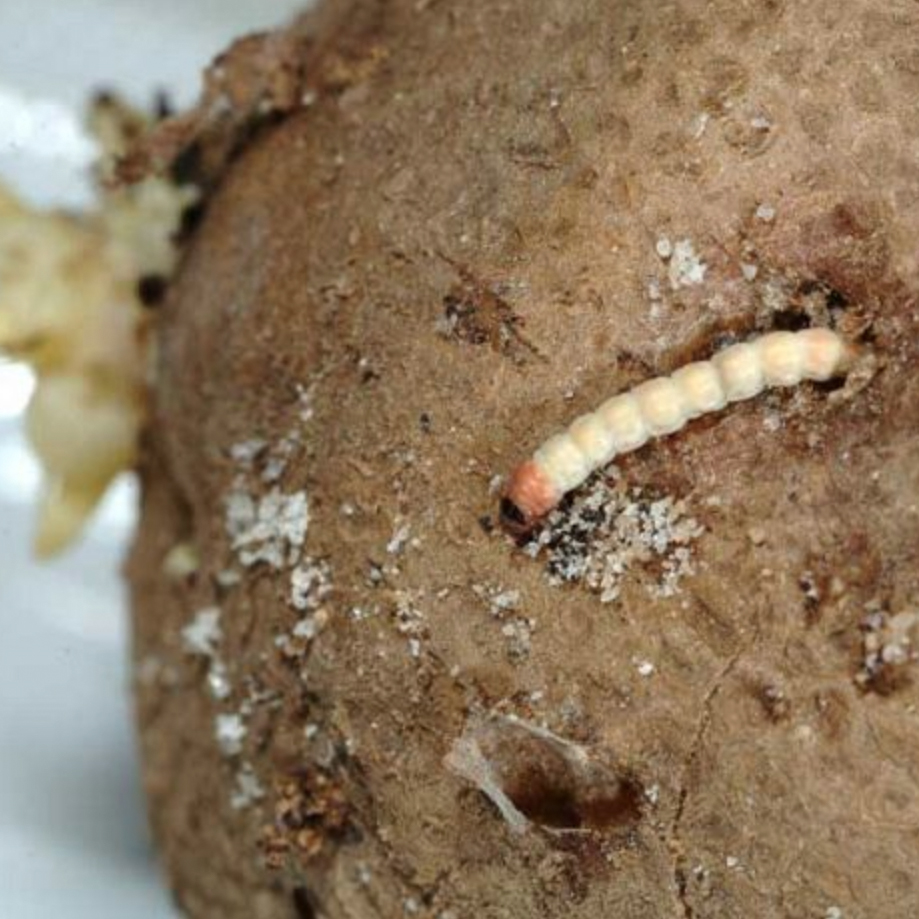
- Potato tuberworm, including monitoring with pheromone traps
- Spider mite scouting and management
Waters and Wohleb also organized and presented at the WSU Extension Onion Field Day in August. The event was held at the site of the 2024 WSU Onion Cultivar Trial in the Horse Heaven Hills, which included 47 onion cultivars and lines from 6 different seed companies. Participants heard research presentations and were able to examine the cultivars in the field.
Subscribe to your choice of WSU Extension newsletters here, including Onion Alert, Potato Alert, and many other crop- and topic-specific publications.
IPM Outreach from Pears to Small Fruits and Seeds
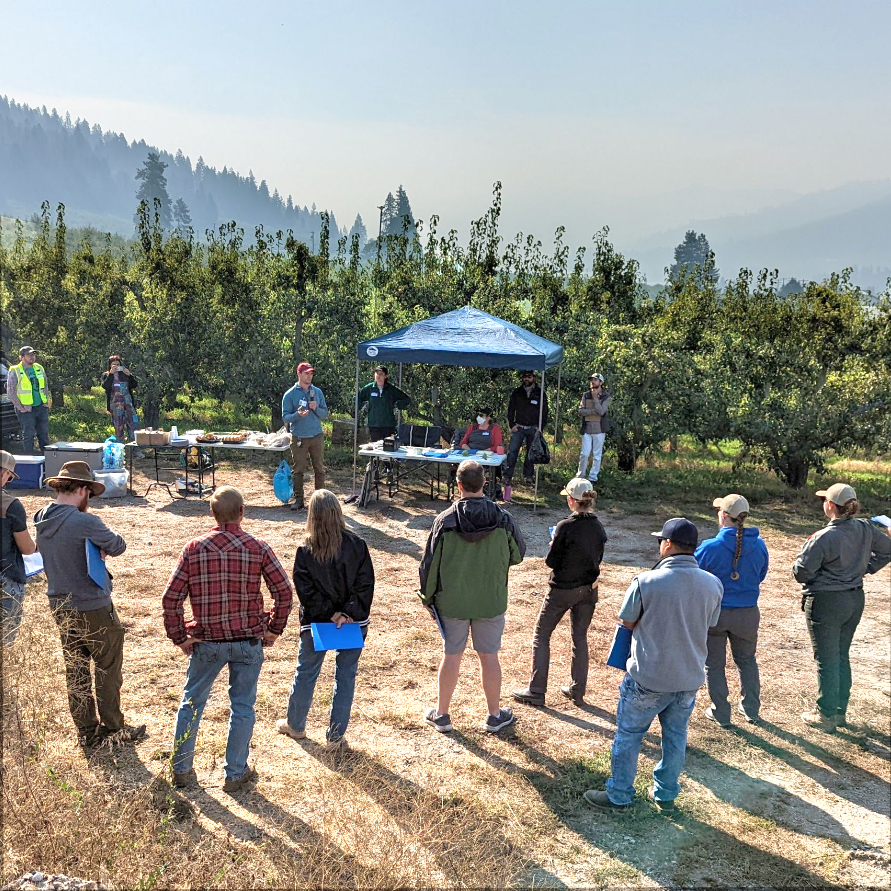
Horticultural Crop IPM Specialist Louie Nottingham is new to the WSU Extension IPM Team this quarter. He works with growers of red raspberries, blueberries, spinach seed, potatoes, and other regionally important crops from WSU’s Northwestern Washington Research and Extension Center at Mount Vernon.
This quarter, Nottingham began wrapping up his work in pear IPM, which he led with Robert Orpet and Molly Sayles for the past 3 years at the WSU Tree Fruit Research and Extension Center in Wenatchee. The pear lab releases a Pear Entomology Weekly newsletter that includes scouting data, pear psylla phenology, and IPM guidelines. The program was featured in an article entitled Promoting IPM in Wenatchee Valley Pear Production by Steve Elliott in the October 2024 edition of the Western IPM Center newsletter, The Western Front.
In September, Nottingham conducted a spotted wing drosophila biocontrol laboratory demonstration for Leadership Skagit, a collaboration between Skagit Valley College and Economic Development Alliance of Skagit County to develop civic leaders through a nine-month, hands-on training program. Nottingham also presented a seedcorn maggot pest management update at a Northwest Washington Vegetables Grown for Seed “pinning” meeting, where growers plan their planting strategies together to maximize production and employ synergistic IPM across the region
IPM Help for Blueberry, Sweetpotato, and Tea Growers
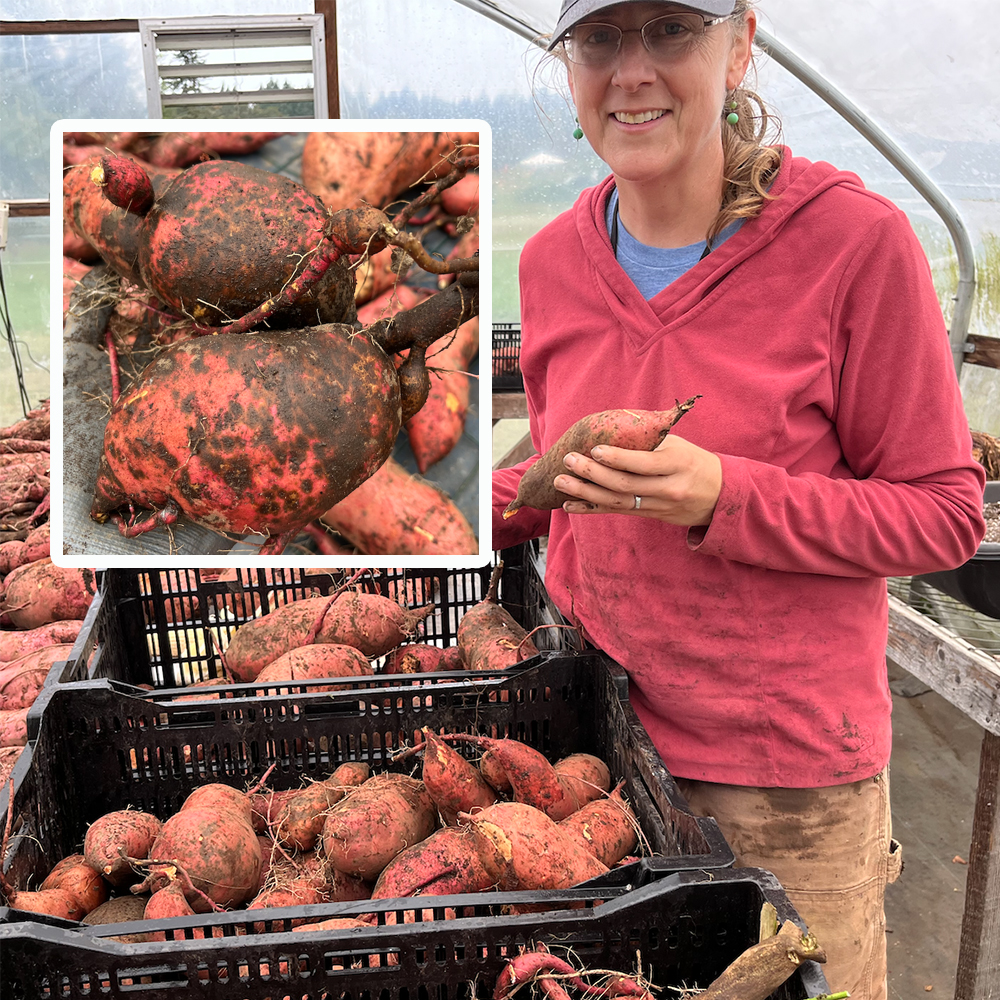
Regional Horticulture and IPM Specialist Laurel Moulton has been conducting site visits to provide IPM technical assistance for blueberries, sweetpotatoes and tea. Both sweetpotatoes and tea are fairly new crops to western Washington.
Sweetpotatoes have adapted well to the temperate climate of the Olympic Peninsula. But the moist, maritime influence can promote certain diseases, one of which is a fungal disease known as “Scurf” (Monilochaetes infuscans). Scurf is managed trough prevention. Farmers can avoid it by purchasing disease-free planting materials or producing their own slips from healthy stock.
Tea (Camellia sinensis) can be produced in many microclimates, and tends to like the acidic soils that also favor blueberry production. Worldwide, over 1,000 different arthropod and disease pests are known to challenge tea growers. A local grower with a weevil problem received diagnostic and management assistance from Moulton.
Part of Moulton’s work with the WSU Regional Small Farms Program is bringing horiticultural and IPM research to small farms in Clallam, Jefferson, and Kitsap counties as well as helping them participate in and benefit from on-farm trials. Through workshops, webinars, and site visits, Moulton brings the science of WSU to help farmers manage disease and insect pests of newly introduced crops in a sustainable manner.
Beers Outreach and Latest Award: ESA Fellow
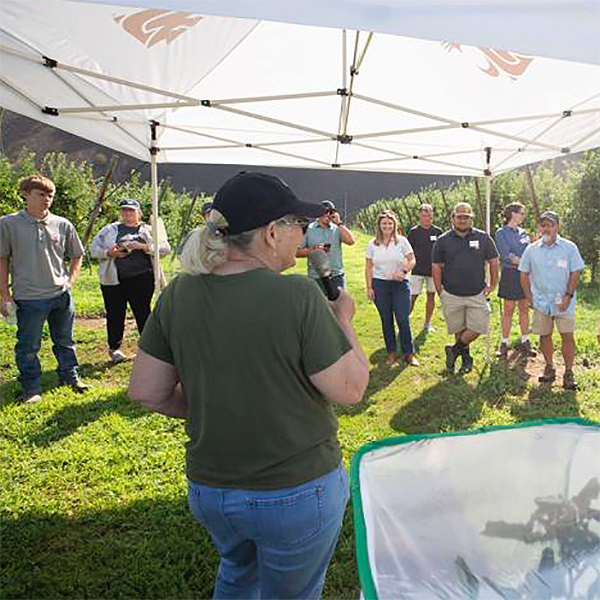
Tree Fruit IPM Extension Specialist Betsy Beers was awarded Fellow of the Entomological Society of America (ESA). Fellows of ESA are individuals who have made outstanding contributions to entomology—via research, teaching, extension, or otherwise—and whose career accomplishments serve to inspire all entomologists. Beers’ profile appears on the ESA website. She is a member of the ESA’s Pacific Branch and its Plant-Insect Ecosystems (P-IE) Section, and was President of the Pacific Branch in 2020.
Beers was a key presenter at the WSU-USDA Tree Fruit Field Day in August. IPM-related topics included use of apple rootstocks, powdery mildew, X-disease management, and beneficial insects for orchards. Beers spoke about lures and traps for monitoring codling moth. Beers also conducted a demonstration and discussion about Ganaspis brasiliensis (now Ganaspis kimorum), a parasitoid was with biocontrol implications for spotted wing drosophila. The event was covered by The Wenatchee World newspaper in the article WSU Wenatchee Tree Fruit Research and Extension Center shows 100 growers latest orchard research.
For more information about the Beers laboratory, visit its Tree Fruit IPM website or follow them on X / Twitter @BeersLab. The website features research presentations and some amazing entomological videos.
Multi-state IPM Coordination, Presentations in Hops and Grapes
Washington State IPM Coordinator and Extension Entomologist Doug Walsh continued his ongoing work with WERA-1017: Coordination of Integrated Pest Management Research and Extension/Educational Programs for the Western States and Pacific Basin Territories. This group provides a platform for information sharing between Alaska, Arizona, California, Colorado, Hawaii, Idaho, Nevada, New Mexico, Oregon, Utah, Washington, Wyoming, and Guam. This year’s meeting took place in September in Reno, Nevada.
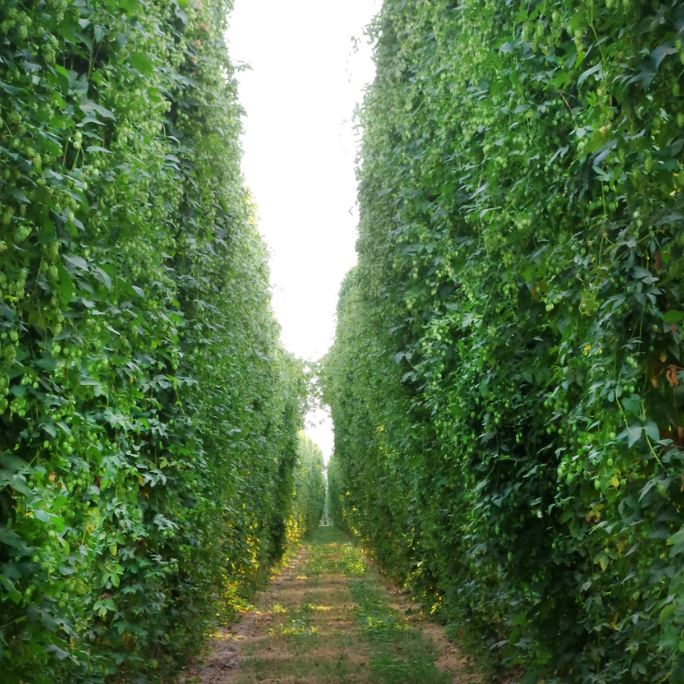
Walsh presented research updates on IPM in Spider Mites and Other Pests of Hops to the Washington Hop Commission and Hop Growers of Washington at their board meetings in July and to the Hop Growers of America, U.S. Hop Industry Plant Protection Committee, and the Hop Research Council at their joint meeting, hosted by Oregon Hop Growers in August.
Walsh and colleague Naidu Rayapati, in cooperation with Melissa Hansen, Research Program Director of the Washington State Wine Commission, continued their work to develop a sustainable strategy to control grapevine leafroll virus through mating disruption. Funded by USDA Specialty Crop Block Grant Program administered through the Washington State Department of Agriculture, this project is in the second year of its 3-year duration. Preliminary results have been presented via field days, industry meetings, and popular press.
Podcasts, Blog Posts, and Upcoming Academy Advance Wheat IPM
Small Grains Extension Specialist Drew Lyon continued his focus on integrated weed management in dryland small grain production systems in eastern Washington. Lyon assists growers with weed control, herbicide use, crop rotation, tillage, and other cultural practices from WSU’s Pullman campus.
Lyon developed and hosts the WSU Wheat Beat podcast. Several of this quarter’s episodes advanced IPM engagement:
- Introducing Dr. Olivia Landau, a new USDA-ARS weed scientist
- Researching herbicide tolerance in winter wheat with Melinda Zubrod
- The significance of fungicide alternatives in winter wheat Production with Aaron Esser
Lyon and weed science colleagues collaborate on the Weeders of the West blog. Topics with IPM implications this quarter included:
- New rules for herbicide applications are coming, are you prepared? by University of Idaho’s Doug Finkelnburg
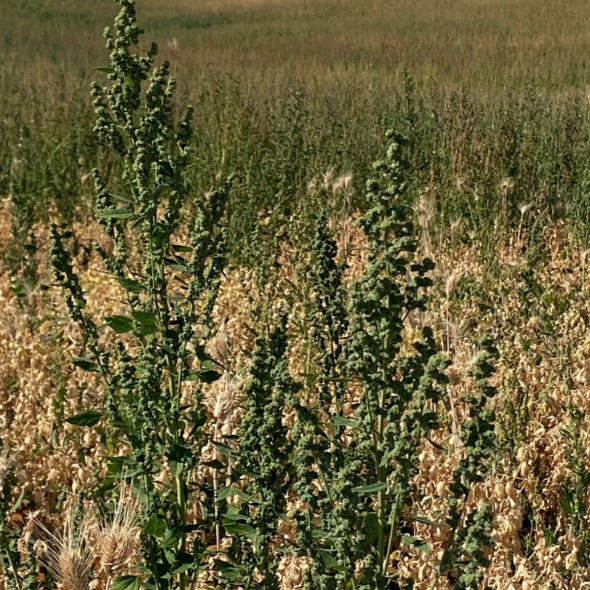
- What Crop is Growing in that Field of Lambsquarters? by Lyon
The blog, podcast, and links to Timely Topics are available on the WSU Wheat & Small Grains website.
Lyon and colleagues in the WSU Extension Dryland Cropping Systems Team also announced that the registration for the 2024 WSU Wheat Academy is now open. This popular two-day event provides a comprehensive, hands-on learning experience for growers and industry professionals in the Pacific Northwest. Dates are December 10-11.
Grape Field Day, Fall Newsletter, and Phylloxera Outreach
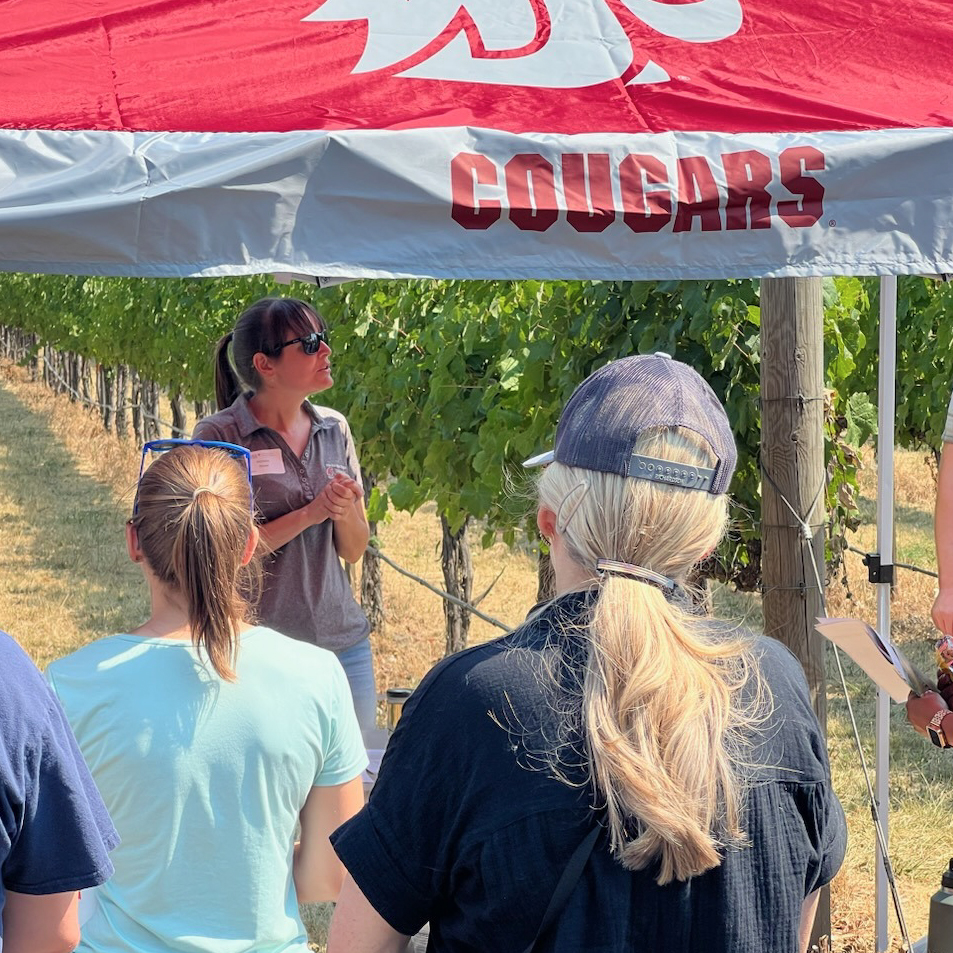
Statewide Viticulture Specialist Michelle Moyer organized and presented at the Viticulture Field Day in August, cohosted by the Washington State Grape Society and WSU Viticulture Extension. The event was held in Walla Walla, and topics included rootstocks in cold climates, alternative weed management, and water monitoring for vineyards. Moyer and colleague Gwen Hoheisel conducted a hands-on phylloxera identification and response session that allowed participants to scout, dig, and diagnose with university scientists.
The Fall 2024 edition of Viticulture and Enology Extension News (VEEN), edited by Moyer, was released in September. Articles with IPM implications included:
- Spotted Lanternfly and Japanese Beetle Update by Washington State Department of Agriculture Outreach Specialist Cassie Cichorz
- Research Roundup by Washington State Wine Commission Research Program Director Melissa Hansen.
Past issues of VEEN are available online and are posted on the WSU Viticulture Extension Facebook page.
In the e-newsletter This Week in Viticulture, Moyer reminded grape growers that the risk of spreading phylloxera is high preceding and during harvest, when people and machinery are moving from block to block within the vineyard. Stakeholders can learn about this pest and strategies for its mitigation on the phylloxera management webpage.