Sustainable Grape Management for Pros and Interns
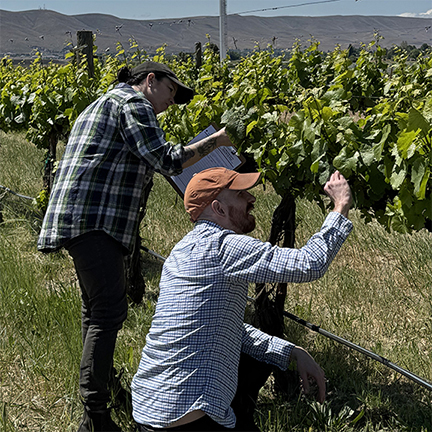
Statewide Viticulture Specialist Michelle Moyer presented Sustainable Approaches to Managing Vineyards Diseases at the Washington Advancements in Viticulture and Enology (WAVE) & WSU Ravenholt Lecture Series workshop in April. The WAVE seminar is the signature research event of the Washington wine industry and is co-sponsored by the Washington State Wine Commission and WSU. Following the seminar, Moyer co-hosted the keynote lecturer, Mary Retallack (Retallack Viticulture / EcoVineyards), for a series of farm visits to the Red Mountain and Walla Walla AVAs, where participants discussed sustainable and ecologically focused vineyard practices.
In May, Moyer spearheaded the popular WSU Viticulture Intern Boot Camp. This all-day workshop is targeted to provide a baseline level of knowledge to company interns specializing in activities or training related to Washington State viticulture. Topics include identification of and scouting techniques for major pests and diseases. Participants engage in both in-class and in-vineyard experiences.
Publications released this quarter include:
- The Spring 2025 edition of Viticulture and Enology Extension News (VEEN), edited by Moyer
- The 2025 Pest Management Guide for Grapes in Washington, the annually updated manual on control of diseases, insects, weeds, and vertebrate pests on commercial grapes
Events, publications, and other resources are available at WSU Viticulture & Enology Extension.
Dirt Talks Bring IPM to Small Farms in Western Washington
Regional Horticulture and IPM Specialist Laurel Moulton presented two Dirt Talks in April. Dirt Talks are in-person and/or online events presented by the WSU Regional Small Farms Team that focus on specific issues of interest to growers in Clallam, Jefferson, and Kitsap counties. The events typically feature a guest expert and encourage discussion and sharing among participants.
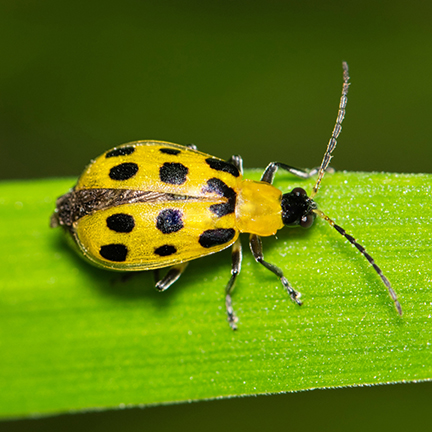
Dirt Talk: Cucumber Beetles featured Brian MacWhorter from Butler Green Farms and Teddy Krause, Farm Manager for the GRACE Project of Kitsap Conservation District. They joined Moulton to discuss the lifecycle, identification, and research-based management recommendations for cucumber beetles. Both striped and spotted cucumber beetles have become more frequent and impactful pests in crops such as squash, cucumbers, and dahlias in western Washington.
Dirt Talk: Integrated Pest Management for Garlic and Onions featured Lindsey du Toit, Chair of the WSU Department of Plant Pathology, who joined Moulton to discuss identification and IPM strategies for downy mildew and white rot, which are becoming more widespread in western Washington allium crops, as well end-of-season curing for management of bulb rots. Du Toit’s research and extension program has focused on epidemiology and management of diseases affecting vegetable seed crops in the Pacific Northwest for more than 20 years.
Bicoastal Cooperation to Educate Cranberry Growers
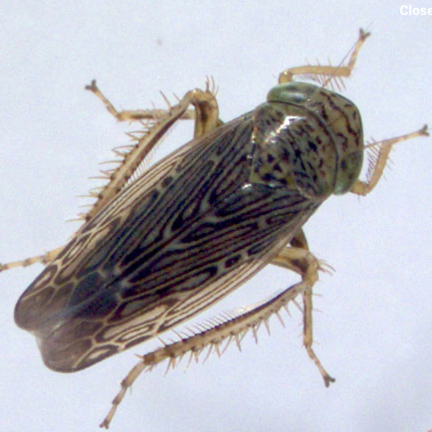
Cranberry and Shellfish Extension Specialist Laura Kraft is Project Director on Inspiring Change in Western Cranberry Grower Renovation Habits to Prevent Invasive False Blossom Disease and Blunt Nose Leafhopper, funded by the Western IPM Center. False Blossom Disease causes permanent yield loss in cranberry plants. It is not currently present in the West, but it impacts growers in the East and Midwest.
False Blossom is vectored via the Blunt Nosed Leafhopper and is also spread via infected nursery cuttings. Kraft’s grant, in cooperation with colleagues at Rutgers University in New Jersey and at Oregon State University, is developing communication tools to help growers impacted by the disease as well as help West Coast cranberry growers forestall the establishment of it. This includes two videos, one focusing on vector identification, monitoring, and management, and one about grower experiences with the insect and the disease. As an invasive species biologist specializing in aquatic crop IPM, Kraft is promoting disease avoidance through both vector management and clean plant sourcing.
An article written by Steve Elliott entitled Growers Helping Growers Avoid a Devastating Cranberry Disease appears in the Agriculture subsection of the Western IPM Center’s Stories section and further describes the project.
Potato Field Day and Potato Alerts Educate Growers
Regional Vegetable Specialist Tim Waters joined colleagues from WSU, University of Idaho, Cornell, USDA-ARS, and the Soil Health Institute to present the WSU Potato Field Day in June. Waters and University of Idaho’s Alexander Karasev spearheaded a presentation and interactive session on Evaluating Alternatives to Neonicotinoids and the Impact on Virus Transmission in Seed Potatoes. This was followed by concurrent field tours, one of which focused exclusively on pest management topics including:
- Pest diagnostics
- Potato virus Y resistance
- Tobacco rattle virus
- Herbicide trial results
- Current trends in Washington potato pests
- Nematode research including a PAPAS update
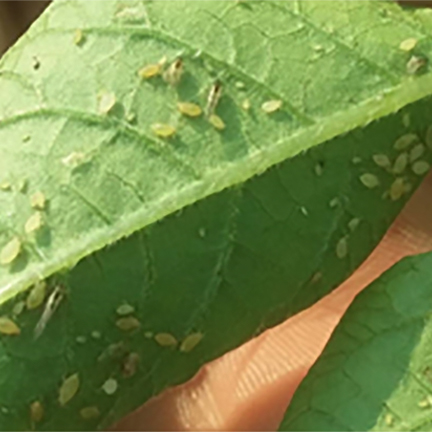
Eight issues of the electronic newsletter WSU Potato Alerts were issued to subscribers this quarter, addressing pests (arthropods, diseases, and weeds) including aphids, beet leafhopper (and the phytoplasma they spread, which causes purple top), Colorado potato beetle, late blight, Lygus bugs, nematodes, potato psyllid, and yellow nutsedge. The alerts were also used to encourage use of the Potato Decision Aid System and to provide tips for users to customize and optimize their results from the system. Growers were also asked via Potato Alerts to participate in the Insect Monitoring Network, tracking pest presence to share with other growers.
Hortsense and Pestsense Websites Evolve and Grow
WSU Extension Master Gardener Program Director Jennifer Marquis coordinates outreach, education, and communication among Master Gardeners and the communities they serve statewide.
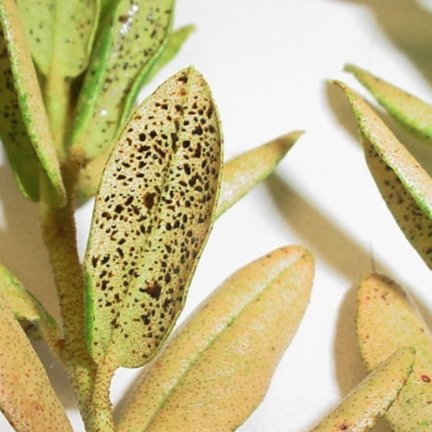
Extension Master Gardeners play a crucial role in IPM education and outreach to communities. They also play an important role in supporting WSU’s efforts in keeping our public resources up to date. In a recent example, a volunteer requested an update to the WSU Extension Hortsense website. Hortsense is a go-to resource for research-based IPM information for home gardeners throughout the state and region. The volunteer, who cited continuing education provided by WSU and OSU, suggested updating the fact sheets dealing with lace bugs, including azalea lace bug and rhododendron lace bug, to include water as a non-chemical management option. The WSU Pesticide Resources and Education Program team reviewed the request and made the change to lace bug management options to include, “Hosing plants with a strong stream of water directed at the underside of leaves will help to remove them, and wingless nymphs will not return.”
The Pestsense website, which aids pest management professionals as well as home dwellers in identification and management of common indoor pests, was also updated this quarter to make it accessible to all users.
Urban IPM in Schools and Other Structures, Parks and Other Sites
Urban IPM Specialist Todd Murray hosted Puget Sound Invasive Species and Exotic Pest Workshop in collaboration with Washington Invasive Species Council at the WSU Puyallup Research and Extension Center (PREC) in May. Participants learned about priority invasive pest detection, impacts, and management specific to the Puget Sound region.
Murray also presented Insects, Infestations & Expert Insights in collaboration with the Northwest Home & Building Inspectors Association. Home inspectors learned the fundamentals for understanding arthropod structural pests and provided extremely positive feedback about the training.
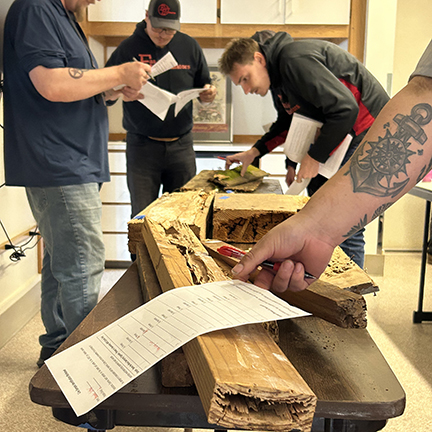
In collaboration with Washington State Pest Management Association, pest management professionals received hands-on training addressing wood-destroying organisms. The course tackled home pest inspections, pest identification, and pesticide application techniques specific to structural pests.
The Urban Pesticide Education Strategy Team (UPEST) presented a symposium on School IPM at the Washington State Environmental Health Association Annual Education Conference in Suquamish. Participants learned how IPM programs in schools help avoid health issues, solve pest problems, and communicate to concerned parents and school health providers.
Media coverage of Murray and his team’s outreach efforts included the articles Bark beetles, ‘murder hornets,’ and other pests affecting Washington state and Trees face a deadly new pest in Pierce County, including at popular park, both in The News Tribune.
Field Days and Web Content Bring IPM to Small Grain Growers
Small Grains Extension Specialist Drew Lyon and colleague Ian Burke spearheaded the 2025 WSU Weed Science Field Tour in June. Sites included Palouse Conservation Field Station and R.J. Cook Agronomy Farm. Burke, Lyon, Joaquin Casanova, and Mark Thorne discussed:
- Burndown and residual weed control
- Weed emergence patterns
- Weed control in pulse crops
- Remote sensing for weed management
- Italian ryegrass control in spring crops
- Weed control in wheat
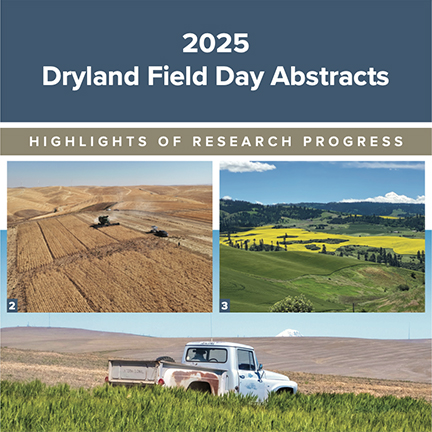
Lyon spoke at the Lind Field Day in June, organized by Surendra Singh, director of the Lind Dryland Research Station. The 2025 Dryland Field Day Abstracts [pdf] offers highlights.
The WSU Wheat & Small Grains website continued to provide important IPM information for growers of small grains and their rotational crops.
- Timely Topics offered Fungicide Application Recommended if Active Stripe Rust Is Observed and It’s Time to Scout for Blackleg in Winter Canola by Cassandra Bates and Develop an Action Plan Now to Control Field Bindweed by Lyon.
- Weeders of the West blog included Enhancing Weed Management with Spring Annual Forages by Doug Finkelnburg and Smooth Scouringrush: A Formidable Foe by Lyon.
- Lyon’s WSU Wheat Beat Podcast welcomed Christina Hagerty, discussing The Coming and Going of Soilborne Wheat Mosaic Virus.
Microscopy and Metarhizium Workshops for Beekeepers
Honey Bee Health Specialist Brandon Hopkins and his team took part in outreach events at middle schools, bee club meetings, master gardener workshops, regional festivals, and online webinars this quarter. IPM-related topics addressed included pesticide exposures to bees in cropping systems, maintaining pollinator diversity, and assessing honey bee colony winter survival rates and reasons.
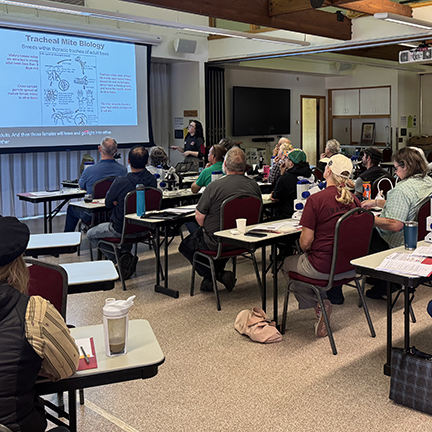
The team hosted diagnostic microscopy workshops in Puyallup and Othello. These popular workshops give participants the opportunity to learn how to diagnose Nosemosis and tracheal mite infection under the microscope. Nosemosis is a disease affecting adult honey bees, leading to reduced lifespan, colony decline, and potential economic losses for beekeepers. Tracheal mites are internal parasites that infest the breathing tubes of honey bees, reducing the bees’ capacity to breathe, exposing the tracheal surface to pathogens, and reducing air flow to the wing muscles.
A special session for citizen scientists on Metarhizium for Varroa control was held at the WSU Honey Bees + Pollinators facility in Othello. Metarhizium is a genus of entomopathogenic fungi that have shown promise as a biological control for Varroa mites. One of the leading causes of honey bee population decline worldwide, Varroa mites are a top concern among Washington State beekeepers.
Codling Moth Discussions and Resources for Tree Fruit Growers
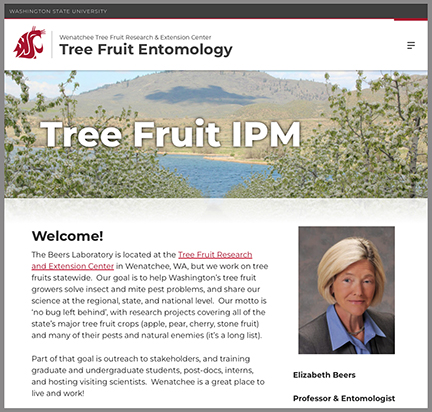
Tree Fruit IPM Extension Specialist Betsy Beers was a guest speaker at the Okanogan Horticultural Society meeting in Oroville in May. This informal discussion focused on mites and other secondary pests, and the codling moth programs that can promote them. Beers is recognized as an expert in managing codling moths in both traditional and novel programs. She is a member of the regional Codling Moth Task Force and was co-organizer and moderator of the 2022 Codling Moth Summit. She also spearheaded the Washington Sterile Insect Release (WA-SIR) project. Modeled after successful mating disruption efforts in British Columbia, Canada, this technique utilized drones to distribute sterile moths over large fruit tree acreage.
Beers is in the process of laying the groundwork for a relaunch of her Beers Laboratory Tree Fruit IPM website. The site contains sections for specific invasive species including brown marmorated stink bug and spotted wing drosophila, up-close-and-personal IPM videos, and links to key resources supporting Pacific Northwest tree fruit growers such as Orchard Pest Management Online, the annually updated Crop Protection Guide for Tree Fruits in Washington, the WSU Tree Fruit website, and the WSU Wenatchee Tree Fruit Research and Extension Center website.
Disrupting Mealybugs in Grapes and Demonstrating IPM in Mint
Washington State IPM Coordinator and Extension Entomologist Doug Walsh has been working for the past few years with WSU Plant Pathologist / Virologist Naidu Rayapati on using mating disruption of grape mealybug as a tool for managing grapevine leafroll disease. Grape mealybug is the primary vector of Grapevine leafroll-associated virus 3 (GLRaV-3), the causal agent of the disease. There is no treatment or cure for the disease, which spreads rapidly, even in vineyards planted with “clean” (certified virus-free) vines.
Walsh presented Mealybug Mating Disruption Efforts In Washington at the Washington Advancements in Viticulture and Enology (WAVE) workshop in Richland in April. Co-sponsored by the Washington State Wine Commission and WSU, WAVE is the signature research event of the Washington wine industry. Walsh also spoke about mealybug MD at the Washington Commission on Integrated Pest Management meeting in Everett in May. The WCIPM, comprised of commodity group representatives and state agencies, funds research and demonstration projects that address the unmet pest management needs of the state of Washington.
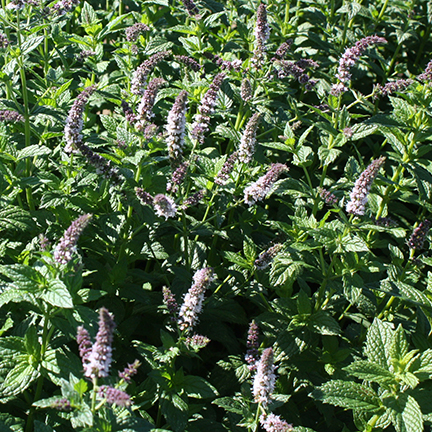
In June, Walsh conducted a Mint Field Day. The event took place in conjunction with the Washington State Mint Commission summer meeting, which was held at the WSU Irrigated Agriculture Research and Extension Center in Prosser.