IPM Outreach Down Under and Close to Home
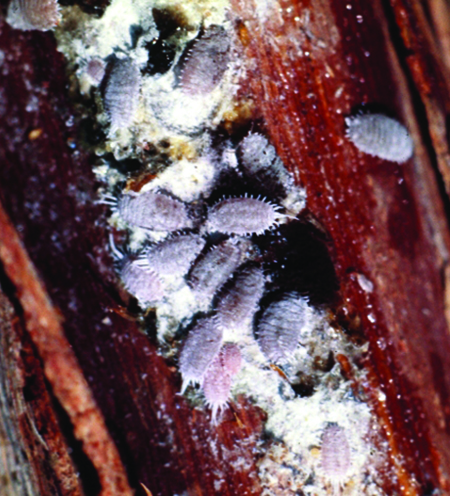
Washington State IPM Coordinator and Extension Entomologist Doug Walsh traveled to Melbourne, Australia to make a presentation at the Hemipteran-Plant Interactions Symposium on December 8. The Progression of Grape Mealybug Research in Washington State, USA Vineyards discussed past, present, and possible future interventions against this persistent wine grape pest. Grape mealybugs are the primary vector of Grapevine leafroll-associated virus, the #1 threat to the economic sustainability of Washington State vineyards. As the grower standard neonicotinoids used to combat GM began to fail, Walsh’s laboratory sought alternative management methods, including pheromone-based mating disruption. This presentation, co-authored by current and former Walsh graduate students Brian Bahder, Jonathan O’Hearn, and Stephen Onayemi, discussed the early successes, challenges, and potential future expansion of this promising IPM tactic. Onayemi also presented on this topic at the Entomological Society of America’s joint Annual Meeting in November (see article following).
Closer to home, Walsh gave a recap of 2022 IPM activities to the Washington State Alfalfa Seed Commission on December 13. The Touchet/Lowden area near Walla Walla is a leading national producer of alfalfa seed, due in large part to its specialty pollinator populations: alfalfa leafcutting bee and alkali bee. Balancing pollinator protection with pest management is an ongoing challenge.
Walsh also made presentations to Washington State Commission on Pesticide Registration on December 14-15 on projects involving hops, wine grapes, mint, and alfalfa seed.

Entomological Societies JAM in Canada
The Annual Meeting of the Entomological Society of America was held November 13-16 in Vancouver, Canada, as a joint annual meeting (“JAM”) with Entomological Society of Canada and Entomological Society of British Columbia. Tree Fruit IPM Extension Specialist Betsy Beers was co-author on several presentations:
- Adapting IPM approaches for spotted-wing drosophila (Drosophila suzukii) management to eastern Washington State, presented by WSU’s Dylan Beal, offered preliminary results on biological, cultural, and behavioral control strategies against this low-economic-threshold pest.
- Potential use of acoustic playbacks for pear psylla IPM through mate disruption, presented by WSU graduate student Dowen Jocson, discussed vibrational tactics as part of the IPM toolkit. (1st place in the student competition.)
- Areawide releases of Ganaspis brasiliensis in the West Coast, presented by USDA-ARS’s Ryan Paul, examined impacts of this imported parasitoid on spotted-wing drosophila across 3 states.
- Drosophila suzukii (Diptera: Drosophilidae): A decade of research towards a sustainable integrated pest management program, presented by Oregon State University’s Gabriella Tait. (Won Journal of Economic Entomology Reader’s Choice Award.)
Beers also gave two talks at the Idaho State Horticultural Society Annual Convention in November:
- Codling Moth IPM in Apples: Tweaking the System
- Invasive Species of Insects in Tree Fruits: The New Normal

SLF Videos Released, ecoPRO Training Conducted
Urban IPM Coordinator Carrie Foss was pleased to finalize, in cooperation with Washington State Department of Agriculture Pest Program and WSU CAHNRS Communcations, two educational videos addressing spotted lanternfly (Lycorma delicatula), an invasive urban, agricultural, and forestry pest that is anticipated to impact the Pacific Northwest:
- Meet the Bug – Spotted Lanternfly. See it? Report it! features WSDA’s Joshua Milnes and Cassie Cichorz and WSU’s Doug Walsh discussing identification, damage, and ways to report sightings of SLF.
- Tree of Heaven is an Invasive Weed! Identify it. Report it. helps viewers identify TOH (Ailanthus altissima), a preferred host of SLF. TOH is a Class C weed, meaning it is prevalent throughout the state. This video features WSDA’s Wendy DesCamp, who discusses TOH reporting and management.
Foss’s team conducted IPM training for landscape professionals October 24-28. Curriculum focused on the eight ecoPRO key principles: protect and conserve soils, conserve water, protect water and air quality, protect and create wildlife habitat, conserve energy, sustain healthy plants, use sustainable methods and materials, and protect and enhance human health and well-being. Foss will be partnering with Washington State Nursery and Landscape Association to offer more ecoPRO training in late February 2023.

Wheat Academy Returns, Podcast Highlights IPM
Small Grains Extension Specialist Drew Lyon and his colleagues were once again able to resume the popular WSU Wheat Academy this year. Held on December 13 and 14, the course offers comprehensive, hands-on learning opportunities in an integrated pest management paradigm. Key presentations included:
- WSU Extension Plant Pathologist Tim Murray and WSU Plant Pest Diagnostician Cassandra Bates on Diagnosing and Managing Diseases of Wheat
- WSU Extension Agronomist Dale Whaley and University of Idaho Entomologist Sanford Eigenbrode on Biology and Management of Hessian Fly & Aphids in Wheat
- WSU Weed Scientists Ian Burke and Drew Lyon on Managing Weeds with Less Reliance on Herbicides
Also this quarter, Lyon’s Wheat Beat podcast featured guests with IPM perspectives:
- USDA-ARS’s Garett Heineck on Co-Innovation, Intercropping, & Perennial Grains
- WSU’s Ian Burke on Preemergence Herbicides for Grass Control
- WSU’s Cassandra Bates presenting the WSU Plant Pest Diagnostic Clinic 2022 Roundup, including the clinic’s role and services along with discussion of some of the diseases diagnosed this past year: snow mold, Rhizoctonia root rot (pdf), Pythium damping off, stripe rust, take-all, wheat streak mosaic virus, and soilborne wheat mosaic virus, as well as plant damage due to weather and misapplication of herbicides and
Soil-Biodegradable Mulch Aids in IPM and Crop Success
Vegetable Horticulture Specialist Carol Miles and graduate research assistant Srijana Shrestha released the second issue (pdf) of BDM Update in October. This newsletter discussed emerging research indicating that sweetpotato, a crop traditionally grown in the southern U.S., could be commercially viable in Washington State, particularly by utilizing soil-biodegradable plastic much (BDM) to raise soil temperatures.
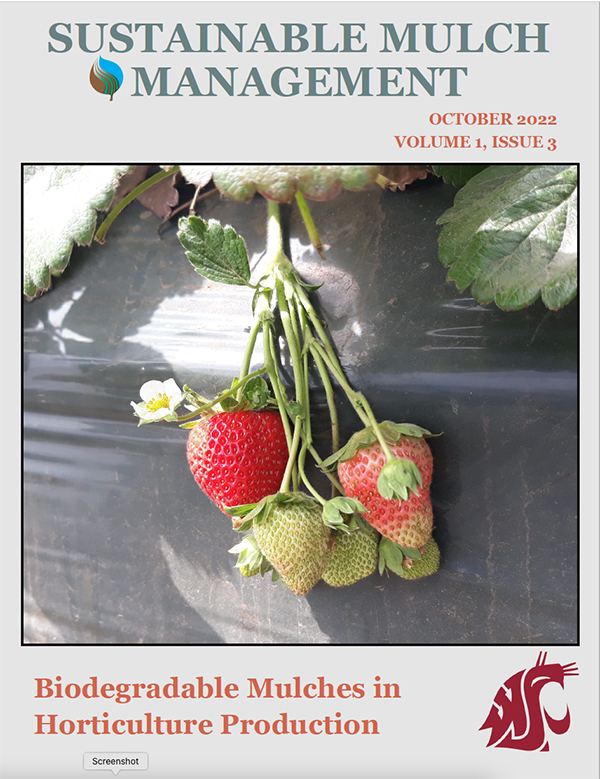
Miles and colleague Lisa DeVetter also released the third edition (pdf) of Sustainable Mulch Management in October. This newsletter targets Extension audiences and those interested in sustainable pest management incorporating agricultural plastic mulches and is a joint venture of the WSU Vegetable Horticulture and Small Fruit Horticulture programs. Articles in this edition included:
- A Lesson on Microplastics, by Marife Anunciado of University of California, Davis
- Biodegradation of Mulches, by WSU’s Srijana Shrestha
- That’s A Wrap! BDM Professional Development Project (2019-2022), a summary of a project funded by Western Sustainable Agriculture Research and Education
- Building A Better Mulching Industry, a Q&A with May Wang by Dakota McFadden, both of whom are former WSU graduate students
- Information about recent publications and upcoming events
Miles and DeVetter invite interested parties to repurpose articles in the newsletter as well as information from their Plastic Mulches website for educational use on their own farm or to share with others.
Olympic Peninsula Farms to Benefit from AgWeatherNet
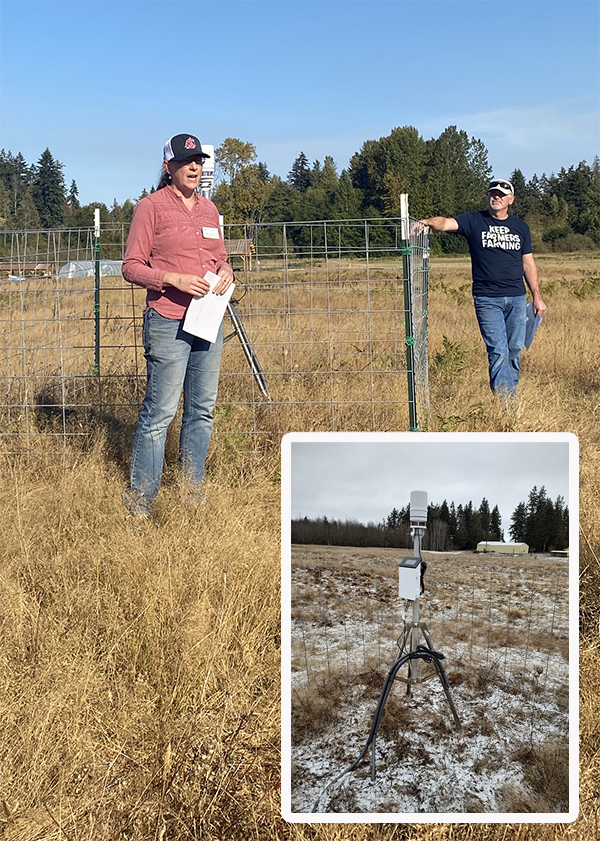
Regional Horticulture and IPM Specialist Laurel Moulton is committed to bringing the AgWeatherNet technology that is so helpful to farmers, gardeners, researchers, and policy makers in other parts of Washington State to the small farms she serves in Kitsap, Jefferson, and Clallam counties. She began in 2020, inquiring about repairing the older, Tier 1 weather station in Sequim and adding new stations to support the small farms in her tri-county area. Weather stations elsewhere had been funded through conservation districts (notably in Whatcom County), so Moulton approached the Clallam Conservation District (CCD).
In 2021, CCD obtained funding to upgrade the aging Sequim weather station. In 2022, they added Tier 2 (newer) weather stations in western Port Angeles and Clallam Bay. Additional stations are planned in Neah Bay, Forks, and Joyce. Multiple weather stations are important because microclimates near the Olympic Mountain Range result in rainfall ranging from 17 inches 100+ inches. Moulton seeks to improve to utility of AgWeatherNet in her region so she can introduce local farmers and orchardists to the tools within the system including WSU Tree Fruit Decision Aid System to improve their integrated pest management programs. Outreach this fall included educating blueberry growers about the mummyberry modeling tools on AgWeatherNet.
Nematode Management and Other Grape Outreach
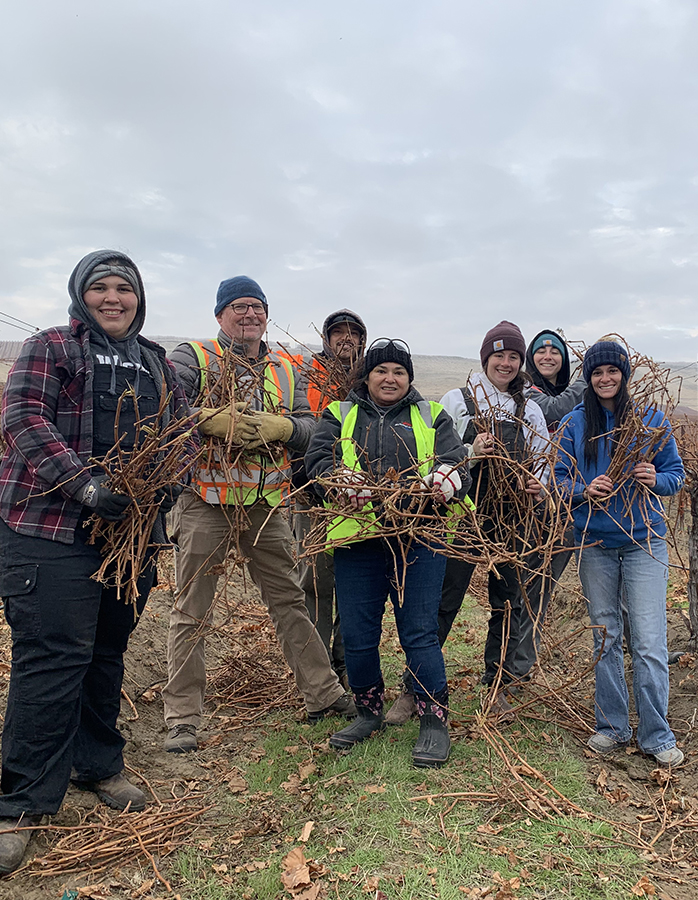
Extension Viticulturist Michelle Moyer presented Preplant Fumigation for Nematode Control [pdf] at the Washington State Grape Society annual meeting in Grandview in November. IPM presentations by former and current Moyer graduate students included:
- Katherine East, USDA Research Plant Pathologist, on the Influence of Soil on Nematodes in Vineyards (pdf) .
- Bernadette Gagnier on Cover Crops Alternatives for Nematode Management (pdf).
- Alexa (Lexie) McDaniel on Illuminating Ultraviolet-C Light for Grapevine Powdery Mildew (pdf).
Moyer and colleagues explained a new project, Evaluation of Novel Cold Hardy Grape Rootstocks for Use in the Pacific Northwest at the November Northwest Center for Small Fruits Research Conference held in Kennewick November 14-15. Newly funded, this project brings Moyer together with University of Minnesota’s Matt Clark and USDA-ARS’s Inga Zasada to evaluate Minnesota rootstocks’ horticultural attributes (e.g., graft compatibility), survival, and response to PNW pest populations (e.g., nematodes).
Also this quarter, Moyer finished editing the 2023 Pest Management Guide for Grapes in Washington. This 64-page guide, the definitive annual Extension publication on IPM in grapes, is now available for download.
Growers and others seeking information about growing grapes in our region should check out the viticulture events on the WSU Viticulture and Enology website.
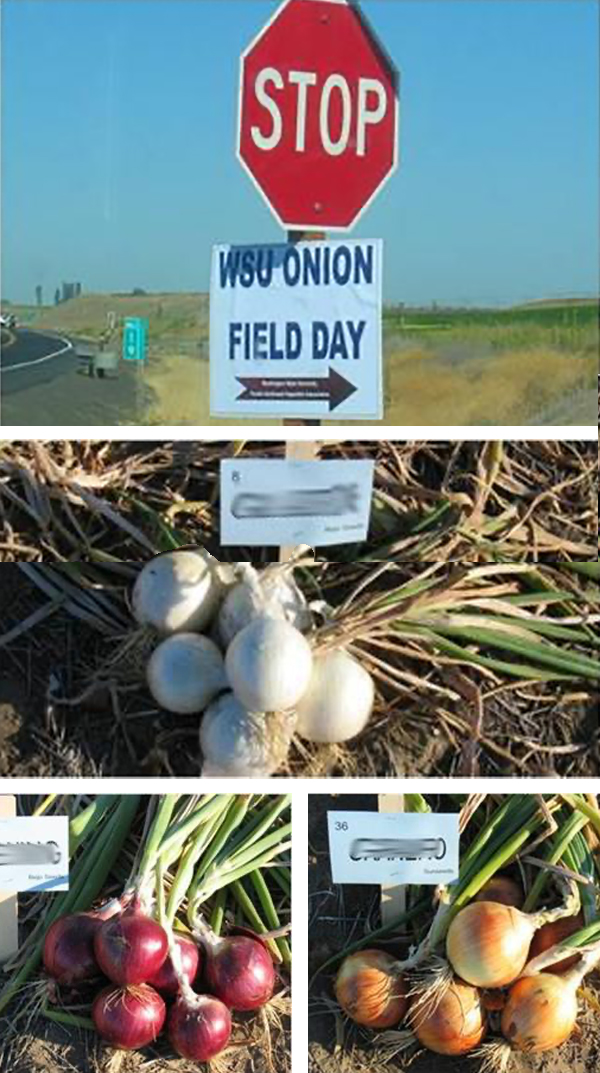
Essential Outreach in Potatoes, Onions, and Other Vegetables
Regional Vegetable Specialist Tim Waters and colleagues Carrie Wohleb and Lindsey du Toit released their fourth 2022 edition of the WSU Onion Alert e-newsletter on December 15. Topics included Onion Cultivar Demonstration Results and current options for seedcorn maggot management. (Subscribe to this and other WSU Extension newsletters here.)
Waters presented Seedcorn Maggot: What Can We Do? (pdf) at the Pacific Northwest Vegetable Association (PNVA) annual conference in Kennewick. His talk included pest biology, scouting, damage, degree day information, research results, and the complicated road to managing this pest in the current regulatory environment. Waters also spoke about Monitoring and Control of Armyworm in Vegetable Crops (pdf) at this November 16-17 conference, which drew 750 attendees.
Other presentations this quarter included:
- IPM Principles for Vegetable Production at the Oregon State University 49th Annual Hermiston Farm Fair on December 2
- IPM in Potatoes at the Lamb Weston Field Staff meeting in Kennewick
- Onion Update sponsored by BASF in Kennewick
- Potato Update sponsored by FMC in CleElum
Finally, in one of those unsung acts of heroism in service of our state’s vegetable growers, Waters wrote support letters for renewal of six Section 24c SLN labels in the quarter. Under US EPA’s Federal Insecticide, Fungicide and Rodenticide Act (FIFRA), these labels allow for an additional use of a federally registered pesticide in a special local need pest situation.