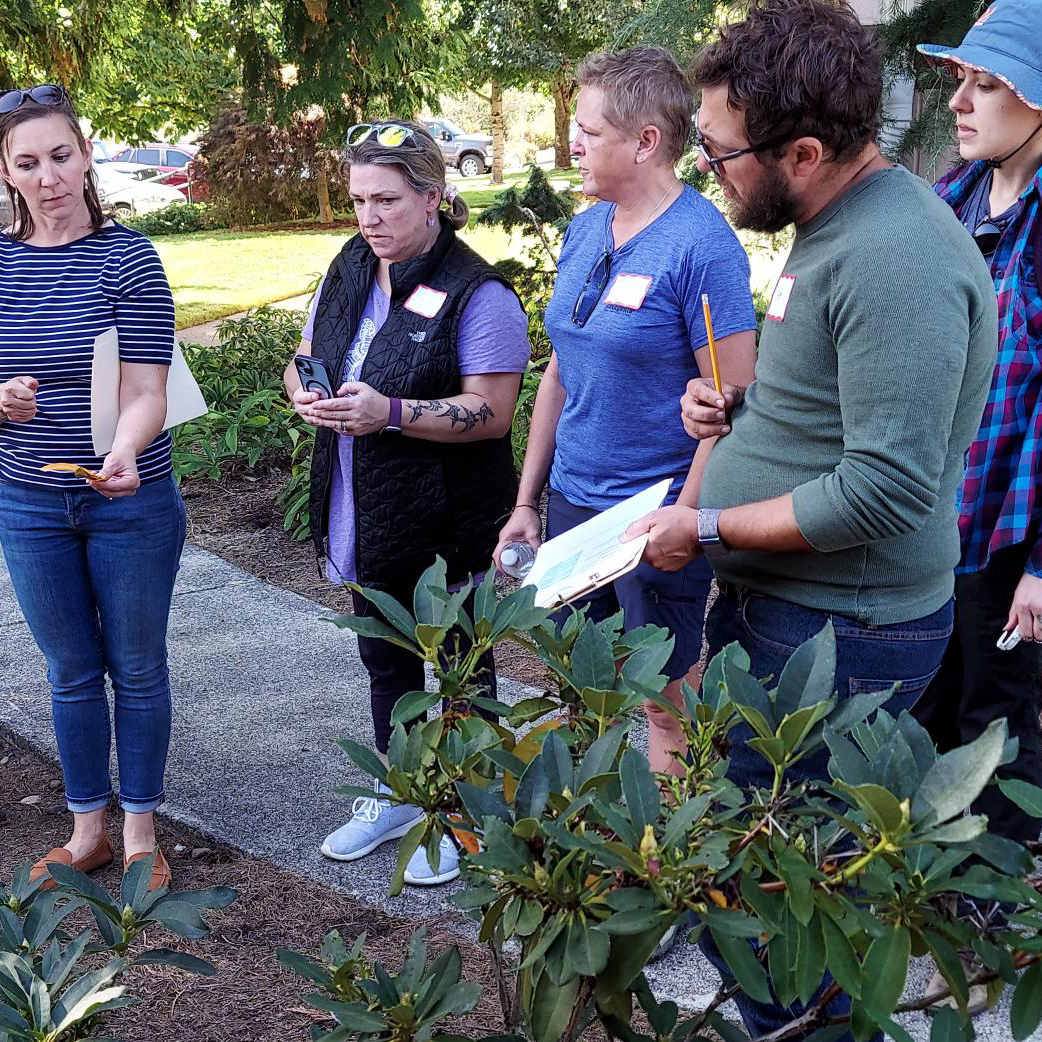
Master Gardener Training and Hortsense Updates
WSU Extension Master Gardener Program Director Jennifer Marquis leads the statewide organization whose mission is engaging university-trained volunteers to empower and sustain diverse communities with relevant, unbiased, research-based horticulture and environmental stewardship education. The program, which started at WSU in 1973, is now in all 50 states and several foreign countries.
During Fall 2024 about 90 new extension volunteers in seven counties across Washington completed WSU Master Gardener training. These new volunteers in Clark, Grant, Adams, Island, Lewis, Mason, and Pend Oreille will take their newfound knowledge about sustainable landscape management using integrated pest management principles to their communities, as WSU’s Master Gardeners have done for over 50 years.
Marquis also oversees maintenance and enhancement of WSU’s Hortsense website. This quarter, that included a variety of tasks:
- Annual review by the WSU Pesticide Resource and Education Program
- Updates to 212 fact sheets
- New and larger images on the homepage
- Edit and redesign of all navigation pages
- Updates to navigation menu to category pages
- Added overview description to category pages
- Additional photos to some fact sheets
- …and a host of other upgrades designed to provide additional information, enhance the user experience, and keep the content consistently up to date
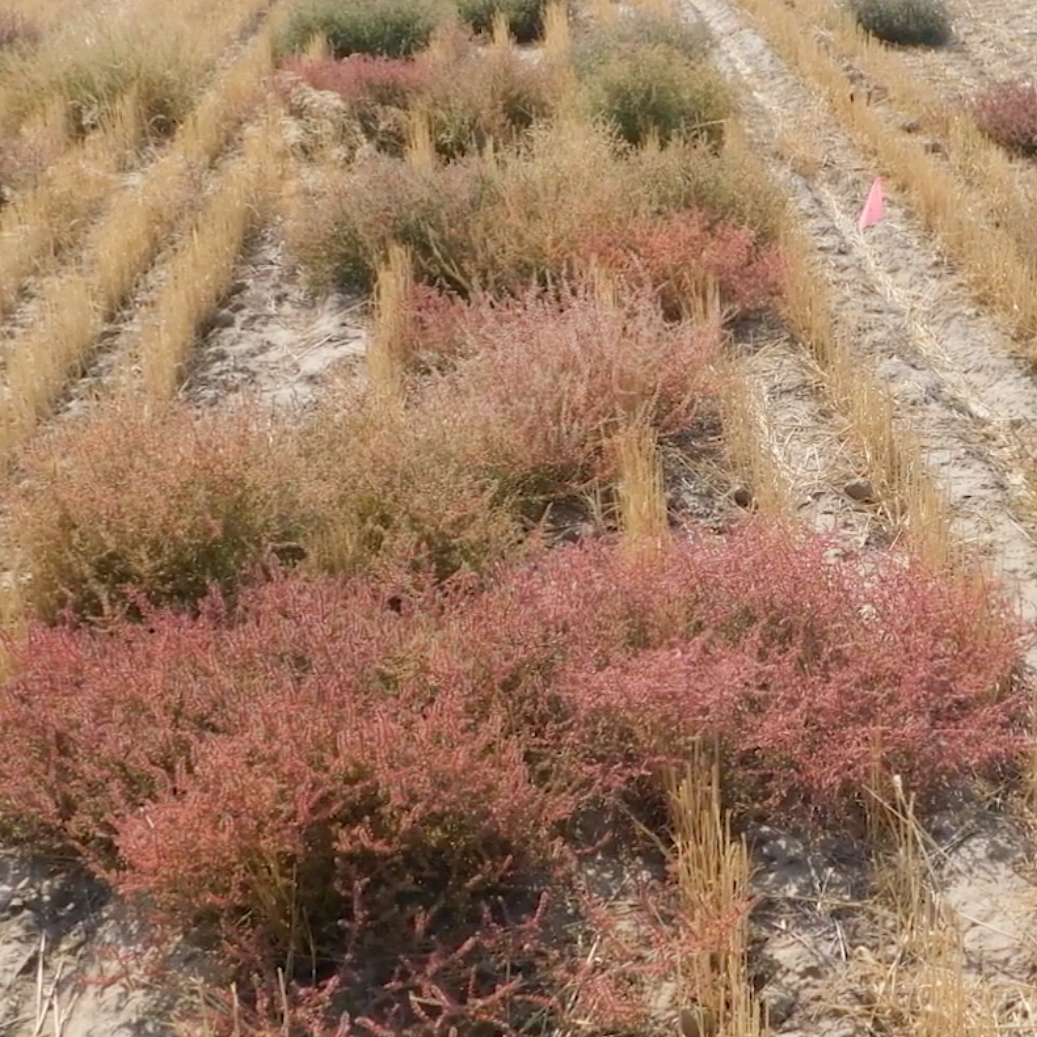
Wheat Academy and Other Small Grains Outreach
Small Grains Extension Specialist Drew Lyon and colleagues conducted the popular WSU Wheat Academy on December 10-11. This premiere educational event offers comprehensive, hands-on instruction in disease diagnostics, insect pest management, herbicide decisions, nutrient management, and much more. It is limited to 75 participants annually. Topics relating to IPM this year included:
- Biology and Management of Pests in Wheat, Canola, and Pulses by WSU’s Dale Whaley and University of Idaho’s Sanford Eigenbrode
- Diagnosing and Managing Diseases of Wheat by WSU’s Tim Murray and Cassandra Bates
- Are Group 1 & 2 Herbicides Obsolete? by WSU’s Ian Burke and USDA-ARS’s Olivia Landau
- Cover Cropping in the Inland PNW by U of I’s Kendall Kahl and Subodh Adhikari
Lyon worked with some of the same experts on his WSU Wheat Beat podcast this quarter, with Murray discussing Wheat Diseases through the Decades and Eigenbrode presenting Biocontrol at Play in the Insect Playground.
Lyon continues to be active in the Pacific Northwest Herbicide Resistance Initiative, a joint project of WSU, U of I, Oregon State University, and the USDA Agricultural Research Service designed to provide support for programs and projects focusing on managing herbicide-resistant weeds in wheat and small grains across the Pacific Northwest.

Grape Presentations, Decision Aid System, and Digitized Guide
Statewide Viticulture Specialist Michelle Moyer co-authored several IPM-related poster presentations for the annual meeting of the Washington State Grape Society Annual Meeting in November.
- Fumigation and Rootstocks: Managing Plant-Parasitic Nematodes in Vineyard Replant Scenarios, with WSU’s Maria Mireles and USDA-ARS’s Inga Zasada
- Digging into the effects and implications of soil health management practices in a long-term research vineyard in Washington State, with WSU’s Elizabeth Gillispie, Markus Keller, Troy Peters, and USDA-ARS’s Devin Rippner.
- The Role of Canopy Management in UV-C-Control Grape Powdery Mildew, with Moyer’s graduate student Jesse Stevens and Mireles.
Moyer has also been working behind the scenes with the WSU DAS team to build out a Grape Decision Aid portal, as well as working to digitize the annual Pest Management Guide for Grapes in Washington.
The DAS platform is in conceptual design stage. Moyer and Gwen Hoheisel, Dave Crowder, and Stefano Borghi are working on grapevine development, root-knot nematode, and phylloxera risk models and hope to have the site ready for beta testing by summer 2025. Upcoming models include powdery mildew and Botrytis. The digitized grape guide is also slated for release this year, and will eventually be integrated with the DAS platform. Watch this newsletter and the WSU Viticulture and Enology website for updates and release information.
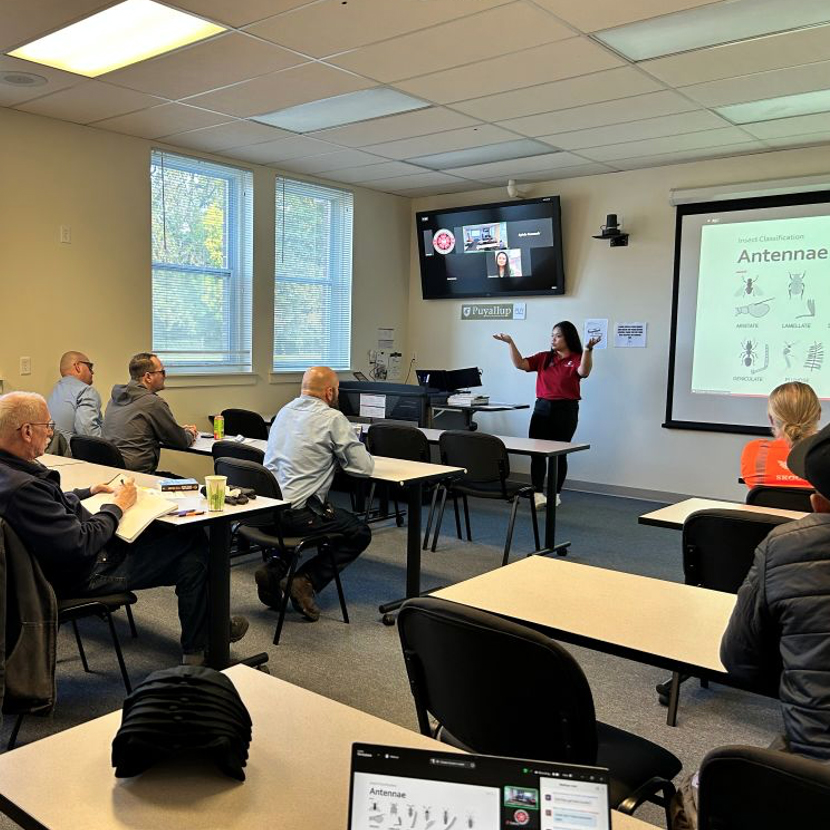
Urban IPM Certification and Invasive Species Trainings
Urban IPM Specialist Todd Murray organized an IPM certification training for 35 career pest management professionals in October. The training was a hybrid of two certifications offered by the Entomological Society of America (ESA), addressing both the ESA’s Certified IPM Technician (CIT) program and its Associate Certified Entomologist (ACE) curriculum. Topics included many aspects of urban pest management (arthropod identification, key pests, pesticide safety, pesticides in an IPM context) as well as ethics and professional code of conduct. Presenters included Murray, WSU colleague Dowen Jocson, University of California’s Andrew Sutherland, BASF Entomologist Sylvia Kenmuir, and Willet Hossfield from ESA’s Certification Corps.
Murray, who was recently elected Chair of the Washington State Invasive Species Council, conducted three invasive species trainings in November and December as part of professional pest manager education days. These presentations, which were part of WSU’s Pesticide Resources and Education Program and the Washington State Pest Management Association, reached over 300 participants. The WSU presentations focused on pests in and around dwellings, highlighting fire ants and new spiders. The WSPMA training, at its Winter Convention, was designed to prepare attendees to identify, monitor, prevent, and control major invasive pests such as brown marmorated stink bug and emerald ash borer in both natural and urban environments.
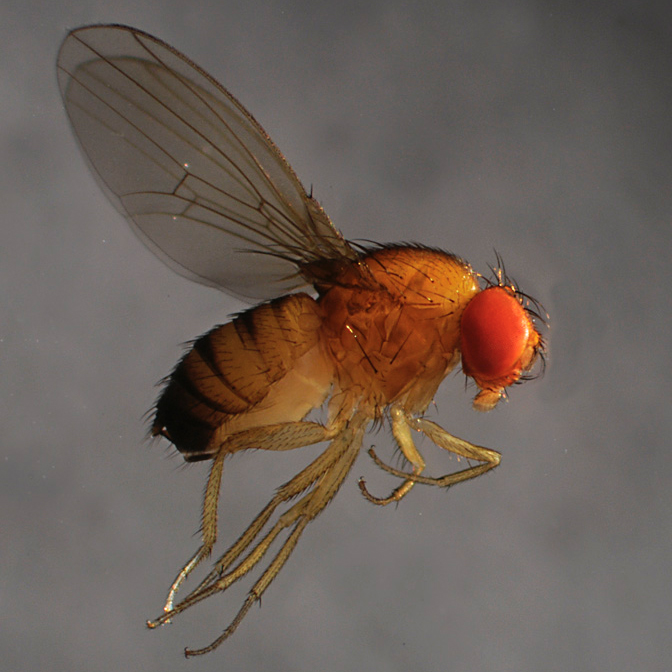
IPM and Pests of Berries in the Spotlight
Horticultural Crop IPM Specialist Louie Nottingham spoke on the topic of Improving IPM Programs for Blueberries and Raspberries in the PNW at the Northwest Center for Small Fruits Research annual conference in November. The 3-day 2024 NCSFR Conference was held in Boise, Idaho.
In December, Nottingham and members of his team at the Nottingham Entomology Lab took part in the Washington Small Fruit Conference and Lynden Ag Show. Their presentations included:
- Integrated Pest Management in NW Washington Berries, a general overview of IPM principles and tools to manage a spectrum of berry pests, with a focus on spotted wing drosophila (Nottingham)
- Impacts of Soil Health and Rotational Crops on Arthropods, presented by Master’s student Adriana Barsan
- Novel Spotted Wing Drosophila Management Product: Decoy, presented by Master’s student Claire Winslow
Nottingham’s presentation was part of session on Pollination, IPM, and Botrytis in Blueberries that was conducted along with WSU colleagues Chakradhar Mattupalli and Lisa Wasko DeVetter. Nottingham also delivered a webinar on Entomology and Integrated Pest Management in WA Specialty Crops for the WSU Pesticide Resource and Education Program’s pesticide recertification webinar series. This series offers an opportunity for Washington pesticide applicators to gain pesticide related training to for recertification credits.
Integrating Arthropod Control in Grapes and Mint
Washington State IPM Coordinator and Extension Entomologist Doug Walsh made several IPM-related presentations to growers and stakeholders in the grape and mint industries in late 2024.
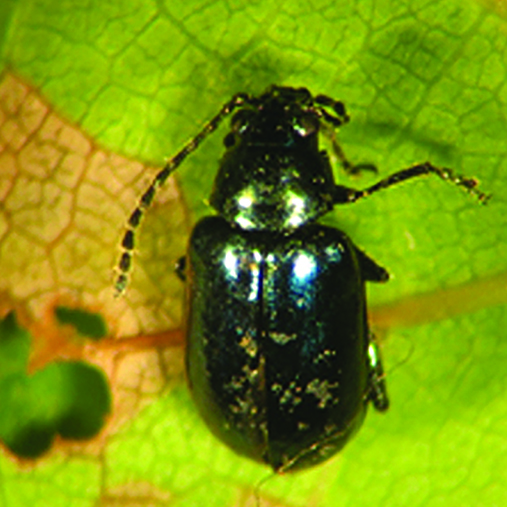
In November, Walsh presented Advances in Insect Pest Control in Washington Vineyards at the inaugural Walla Walla Grape Day, sponsored by Oregon State University. The comprehensive presentation included a discussion of “The IPM Continuum” in vineyards, overviews of primary vs. secondary and direct vs. indirect pests, and discussion of specific pests including cutworms, thrips, leafhoppers, scales, grape flea beetle, brown marmorated stink bug, grape leaffolder, black vine weevil, and phylloxera as well as emerging pests.
Walsh drilled down on a single vector at the annual meeting of the Washington State Grape Society later in November, presenting Results of 2024 Grape Mealybug Mating Disruption Demonstration Trials. Grape mealybug has been determined to be the primary vector of grapevine leafroll in Washington State, and efforts are underway to control the pest with pheromone-based mating disruption. In December, Walsh presented Mint Root Borer Control with Diamide Insecticides and Integrated Management of Mites on Mint the Washington Mint Convention. Diamide insecticides such as cyantraniliprole and alternative miticides (including plant essential oil-based products) offer promising results as an addition to the mint IPM toolkit.
Classic Biocontrol for SWD & BMSB plus Codling Moth IPM
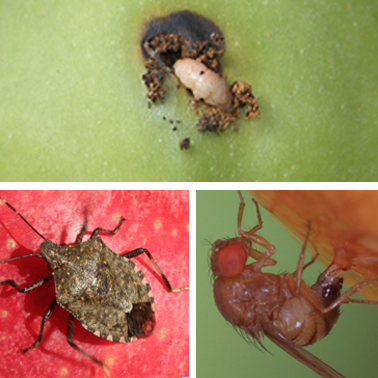
Tree Fruit IPM Extension Specialist Betsy Beers, along with WSU Department of Entomology colleague Allan Felsot, organized this fall’s Hyde Seminar Series. Featuring nine experts in classic biocontrol, this colloquium spanned four months and was available both live on the Pullman campus and via Zoom. Speakers included Matt Buffington of the USDA-ARS Systematic Entomology Laboratory, who is nationally recognized for his work on parasitoid wasps in the family Figitidae, which are biocontrol agents of spotted wing drosophila (SWD). Most of the presentations dealt with biocontrol of SWD and brown marmorated stink bug (BMSB). Beers’ own IPM activities have included release of >15,000 Trissolcus japonicus, a parasitoid of BMSB, and >9,000 Ganaspis kimorum, a parasitoid of SWD, classic biocontrol programs that aim to restore nature’s balance and provide permanent pest suppression.
Master’s student Rob Czokajlo discussed figitid parasitoids of SWD when he presented his work at the Beers Lab as part of the Science in Our Valley seminar series. His talk was entitled Classical Biological Control: An Overview.
Beers also made presentations about codling moth (CM) IPM:
- Codling Moth Management: The “Core” of Your IPM Program, Washington State Tree Fruit Association Annual Meeting and NW Hort Expo.
- Overview of her CM research and extension since the 1980s, Codling Moth Task Force.
- Non-Target Effects of the CM Program on Secondary Pests, Idaho State Horticultural Society.
IPM Outreach in Onions, Potatoes, and Other Vegetables
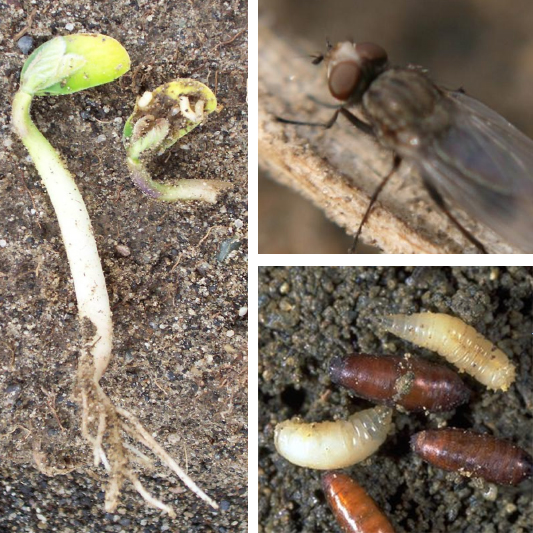
Regional Vegetable Specialist Tim Waters gave several presentations at the Pacific Northwest Vegetable Association annual conference in November. Two addressed management of seedcorn maggot, one for vegetables in general and one specifically addressing the pest’s implications in onions. Both talks included:
- Pest introduction, identification, and biology
- Scouting methodologies
- Recognizing damage
- Degree day information
- Integrated management considerations
- Research results
Waters also presented Attract and Kill Insect Baits in the pest management session of the PNVA conference. The session began with an overview of the various ways insects communicate (auditory, visual, tactical, chemical), and how understanding this can lead to deploying appropriate and effective attractants. Advantages of attract-and-kill methods include their relative safety to humans and non-target species, their low residues compared to conventional pesticides, and their longer field life. In December, Waters presented Identifying Alternatives to Neonicotinoids for Managing Insect Pests of Potato at the Lynden Ag Show. Neonicotinoid insecticides are widely used in potato production to mitigate losses to insects and to control disease transmitted by aphids, psyllids and leafhoppers. But these insecticides are currently under scrutiny and may be unavailable for use in the near future. Waters discussed studies designed to evaluate and determine the management options for growers.
Cutworms and Other IPM Concerns for Small Farms
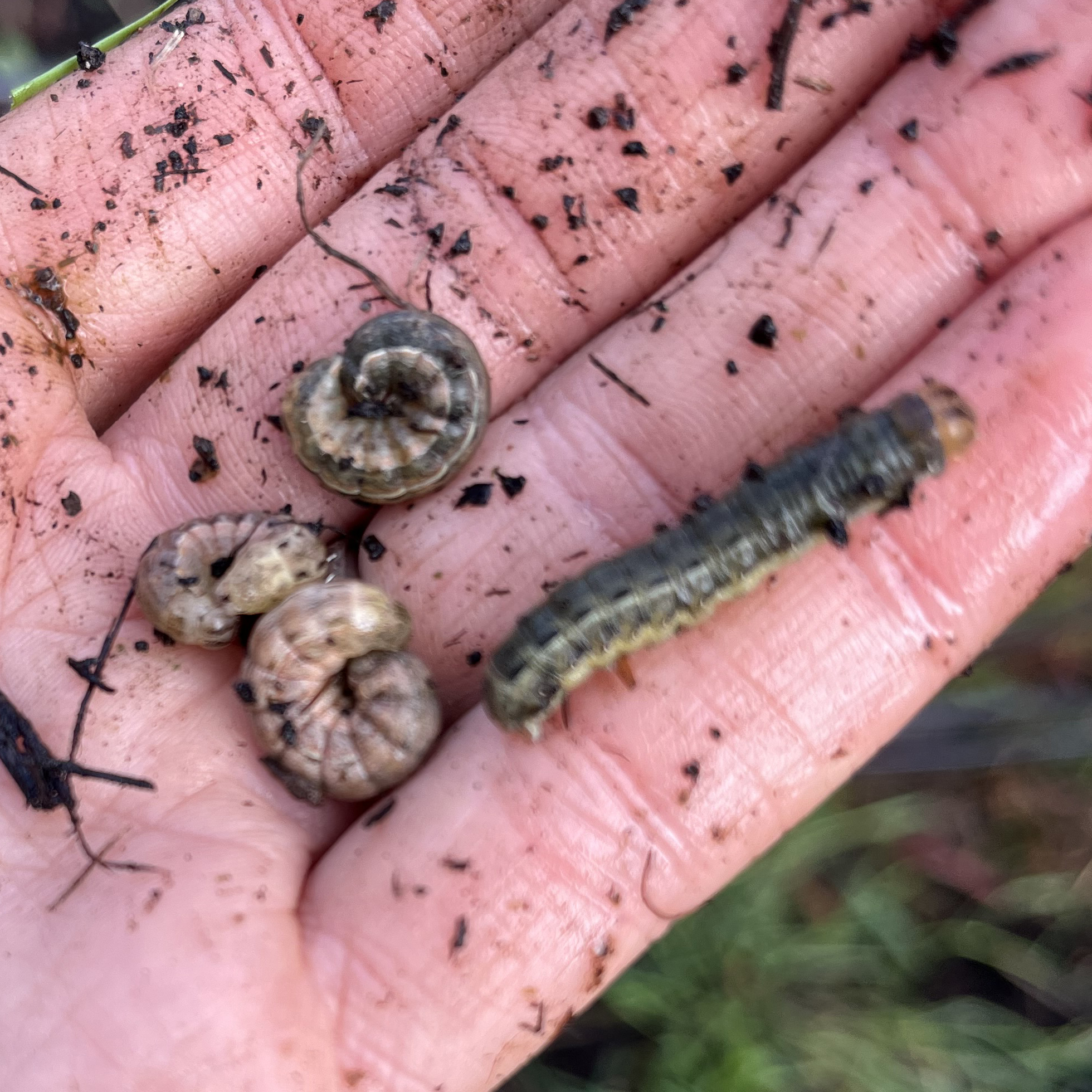
Horticulture and IPM Specialist Laurel Moulton hosted an informational session on Winter Cutworms in December. This 90-minute discussion, part of the Dirt Talk series, was designed to address growing concerns among farmers across the Olympic and Kitsap peninsulas who have experienced heavy losses of winter crops due to cutworm feeding.”. The invasive pest, Noctua pronuba, was first confirmed in the western Washington counties served by Moulton and the WSU Regional Small Farms Team about 10 years ago. Moulton provided an overview of the pest and recommended management methods, then facilitated a roundtable discussion among participants.
Moulton also hosted the End of Season Sweetpotato Grower Round Table in November. This event included brief presentations from WSU researchers on what they learned from their trials this season, then segued into participating farmers sharing their experiences with the crop this past season and learning from one another. IPM topics discussed included management of wireworms, voles, and scurf.
The WSU Regional Small Farms Program supports small to medium-sized farms in Clallam, Jefferson, and Kitsap counties. In addition to the outreach programs described above, Moulton worked with small farm operators who reached out for assistance with managing:
- Storage rot in winter squash,
- Weevils in a kale seed crop,
- Botrytis in greenhouse tomatoes, and
- Weeds in perennial cut flowers.
Aquatic Crop Outreach from WSU Long Beach
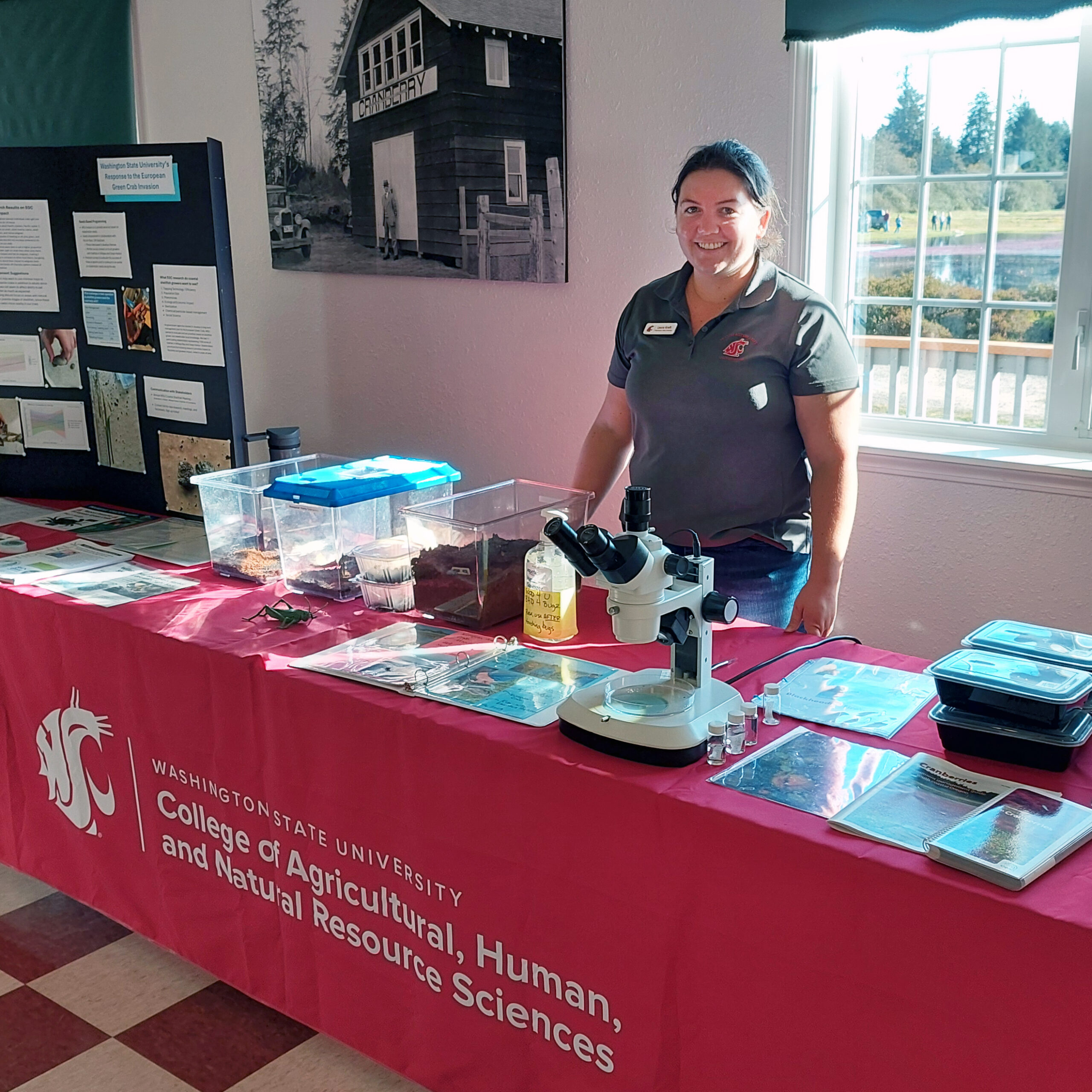
Cranberry and Shellfish Extension Specialist Laura Kraft participated in the Long Beach Cranberry Harvest Weekend at the Pacific Coast Cranberry Research Foundation Museum. Attendees could view tiny cranberry tipworms under a microscope and learn about European Green Crab (ECG), an invasive species impacting the state’s shellfish industry.
Kraft also discussed ECG at a Tide Talk event in South Bend, in cooperation with Willapa-Grays Harbor Estuary Collective, a group whose mission is increasing the resilience of estuary ecosystems and shares WSU Long Beach Research and Extension Unit’s concern about this new coastal southwestern Washington pest.
Kraft collaborated with Washington Sea Grant to bring hands-on outreach to an aquaculture trade class at Ilwaco High School. Students had the opportunity to dissect an oyster and were invited to sign up for an aquaculture workforce development training Kraft will instruct in spring 2025
As the winner of the Formal and Informal Education section of the Entomological Society of America (ESA), Kraft was chosen to speak at ESA’s Early Career Symposium, where she presented results from the needs assessment conducted for this new ESA section.
Kraft conducted a webinar on growing degree days for the WSU Pesticide Resources and Education Program, reaching 260 participants statewide.
Bee Program Team Reaches Out to Diverse Audiences
Honey Bee Health Specialist Brandon Hopkins and his colleagues in the WSU Bee Program conducted 20+ outreach presentations this quarter at venues including the WSU Pesticide Resources and Education Program, Olympic Peninsula Fungi Festival, Entrepreneurial Faculty Ambassadors, Evergreen Thumb Podcast, and the American Honey Producers Association Conference and Tradeshow.
Along with lead author Ge Zhang and co-authors Ryan Kuesel, Rae Olsson, Riley Reed, and Xia Liu, Hopkins was a co-author on Pesticide Exposure Patterns in Honey Bees During Migratory Pollination that appeared in Journal of Hazardous Materials in December.
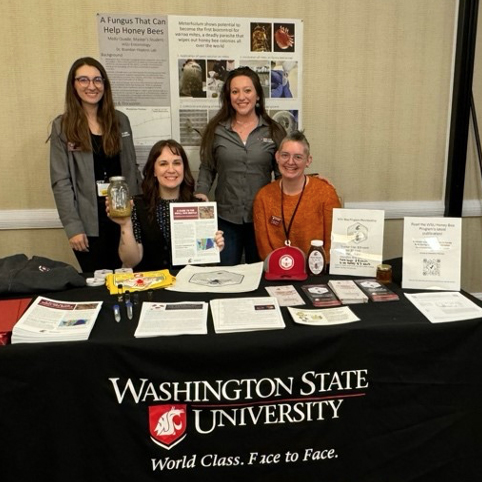
Several Bee Program team members made presentations at the Washington State Beekeepers Association Pacific Northwest Beekeeping Conference in Lynnwood, WA and staffed a program booth offering educational materials, the opportunity to view live small hive beetles (to highlight the new Extension publication, A Guide to the Small Hive Beetle: An Emerging Pest in Washington State), a pre-print of the aforementioned journal article, and bee program merchandise.
The team also made presentations about honey bee nutrition, supplemental feeding during vegetable seed pollination, pesticide detoxification, and emerging pests in Washington State at the Entomological Society of America conference in Phoenix, AZ.