Entomology Award and Outreach in Alfalfa Seed and Hops
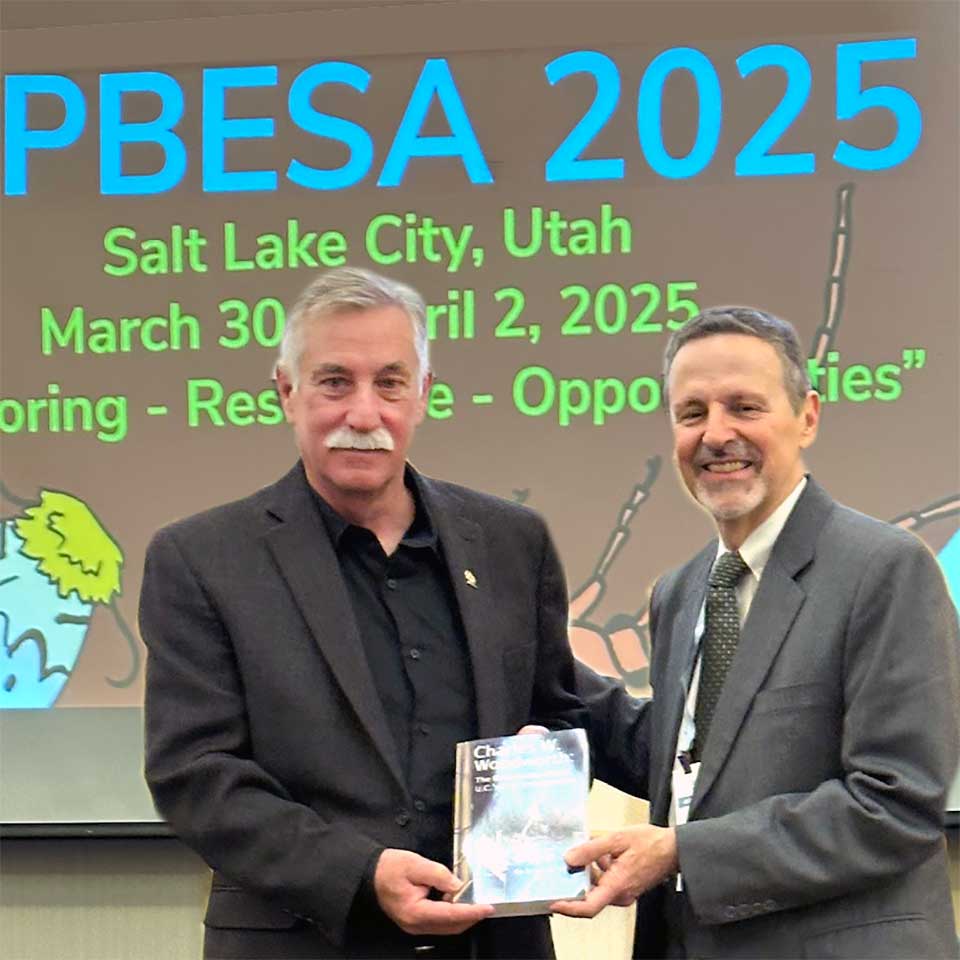
Washington State IPM Coordinator and Extension Entomologist Doug Walsh received the C.W. Woodworth Award, the highest honor from the Entomological Society of America’s Pacific Branch, at its March 30-April 2 meeting in Salt Lake City. Named for renowned American scientist Charles W. Woodworth, the award recognizes outstanding accomplishments in entomology. Walsh’s career and this award were highlighted in a UC Davis Department of Entomology & Nematology article by Kathy Keatley Garvey
As he does every year in late January, Walsh presented at the Western Alfalfa Seed Growers Association annual meeting. With USDA-ARS colleagues Kelsey Graham and Michelle Kirchner, Walsh co-authored Novel Approaches for Pest Management and Pollinator Protection and Lygus Control Studies 2024; with WSU colleague Silas Bossert he co-authored Enhancing and Protection Populations of Alfalfa Seed Pollinators. This year’s event took place in Phoenix.
Also on Walsh’s annual outreach calendar, the 69th annual American Hop Convention was held near San Diego. Hosted by Hop Growers of America, this year’s convention theme was “Charting the Course.” Walsh provided an update on hop research activities in Washington and the Pacific Northwest to the Hop Research Council, whose winter meeting is concurrent with the convention.
IPM Outreach in Potatoes Includes Webinar and DAS Training
Regional Vegetable Specialist Tim Waters moderated an afternoon session at the Washington & Oregon Potato Conference in January. The event, held in Kennewick, welcomed 2,500+ attendees representing 600+ farms and 200,000+ acres of potatoes.
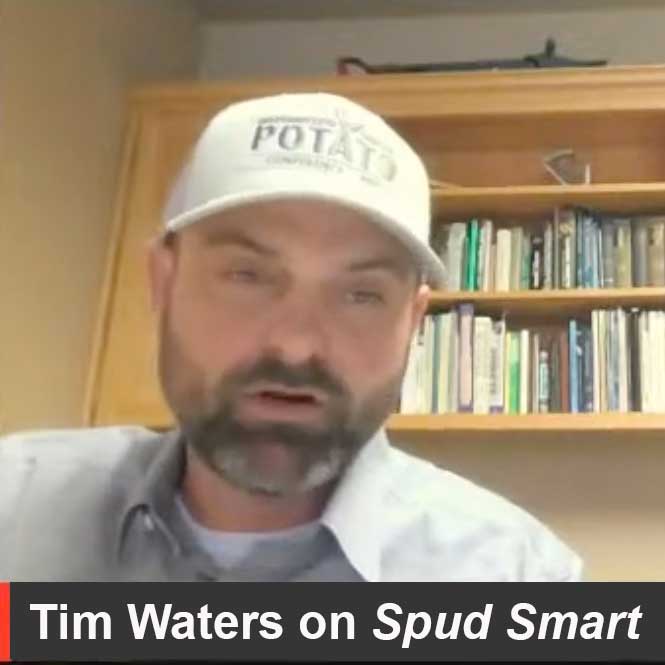
In February, Waters and Alan Schreiber, President of Agriculture Development Group, Inc. presented a webinar entitled Save Money on Pest Management Without Compromising Quality on Spud Smart, a Canadian magazine and website dedicated to the potato industry. The presentation highlighted several years of work funded by the Washington State Potato Commission showing the value of a range of IPM practices proven to benefit the bottom line.
Waters has also been working to educate growers on using the WSU Potato Decision Aid (DAS) System. Trainings were conducted at the AgriNorthwest agronomy meeting, the Simplot Columbia Basin Potato Grower Meeting, and one-on-one with prospective users, resulting in many signups and new users for the system.
In other crops, Waters presented Insect Pest Management for Seed Crops at the Columbia Basin Seed Association annual meeting in January. Other IPM-related presentations by WSU experts included Yellow Nutsedge Management by Rui Liu and Battling Bean Bacterial Wilt by Lindsey du Toit. The event was held at the Grant County Fairgrounds.
Bee Program Reaches Seed Growers, Spanish Speakers, and More
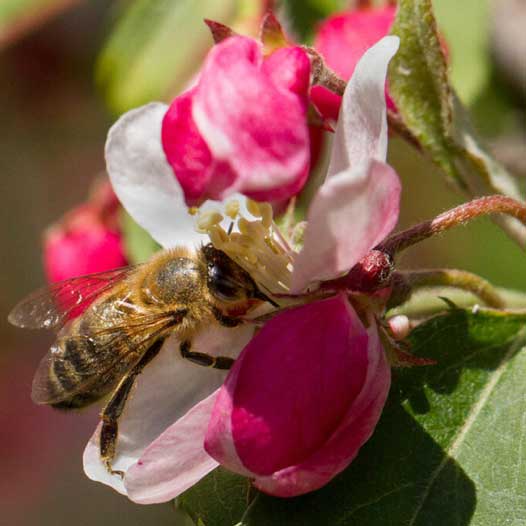
Honey Bee Health Specialist Brandon Hopkins and PhD candidate Riley Reed presented WSU Honey Bee Program Update at the Columbia Basin Seed Association annual meeting in January. This event provided an opportunity to highlight the many research and extension initiatives currently underway within the WSU Honey Bees + Pollinators program.
Hopkins and colleague Priya Chakrabarti Basu were interviewed for an article in the WSU Insider in March. The article, Honey bee colony declines grow as WSU researchers work to fight losses, examines the unfortunate prediction that colony losses, which typically range between 40 and 50%, could be as high as 60 to 70% in 2025.
The bee education and outreach team, including Hopkins’ colleagues Rae Olsson and Bri Price, recently launched a Spanish language version of their website. Abejas melíferas y polinizadoras provides resources that allow beekeepers and handlers whose first language is Spanish to make critical decisions that could enhance colony health and survival. The website is part of a greater outreach effort to make all of the WSU Honey Bees + Pollinators program resources more accessible, including the Buzzy Bee Blog (Blog del Programa de Abejas) and updates on the group’s Research (Investigación) and Extension (Extensión y divulgación) activities.
Wine Grape Conferences and Publications
Statewide Viticulture Specialist Michelle Moyer released five issues of the This Week in Viticulture e-newsletter on behalf of WSU Viticulture & Enology Extension and the Irrigated Agriculture team.
At the 2025 Unified Wine & Grape Symposium in Sacramento in January, Moyer, in her capacity as President of the American Society for Enology and Viticulture (ASEV), welcomed attendees and introduced keynote speaker Karen Ross, California Department of Food and Agriculture Secretary. The Symposium has been a joint project of ASEV and the California Association of Winegrape Growers since 1995.
Moyer also attended B.E.V.NY (Business/Enology/Viticulture New York) in March, where she presented Planning for, Identifying, and Managing Fungicide Resistance along with Michigan State University colleague Tim Miles. Moyer and Miles are both active in FRAME Networks, serving as Project Director and Project Co-Investigator, respectively.
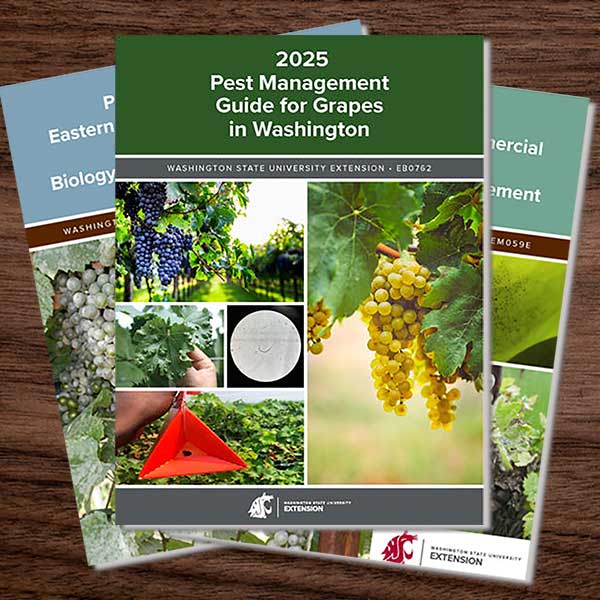
Moyer authored the recent revision of Washington State’s powdery mildew (PM) management guides. The two guides, originally released in 2012, contain updated information to address eastern Washington and western Washington PM management, respectively, and are available for free download.
Also released this quarter, Pest Management Guide for Grapes in Washington 2025 is the go-to IPM publication for viticulturalists statewide. Moyer co-authored the spray guide, nematodes, and plant diseases sections of this annually revised publication.
Tree Fruit Presentations, Guidebook, and Web Content
Tree Fruit IPM Extension Specialist Betsy Beers participated in the North Central Washington Tree Fruit Days in January and February. Co-sponsored by Northwest Cherries, Pear Bureau Northwest, NCW Fieldmen’s Association, and the Okanogan Horticultural Association, these events provide the latest research-based information on horticulture and pest and disease management. The events took place in Wenatchee and Okanogan, with a virtual webinar option for remote attendance. Beers’ presentations included New Codling Moth Tools and Aphids Everywhere: Aphid Management After a Cool Year.
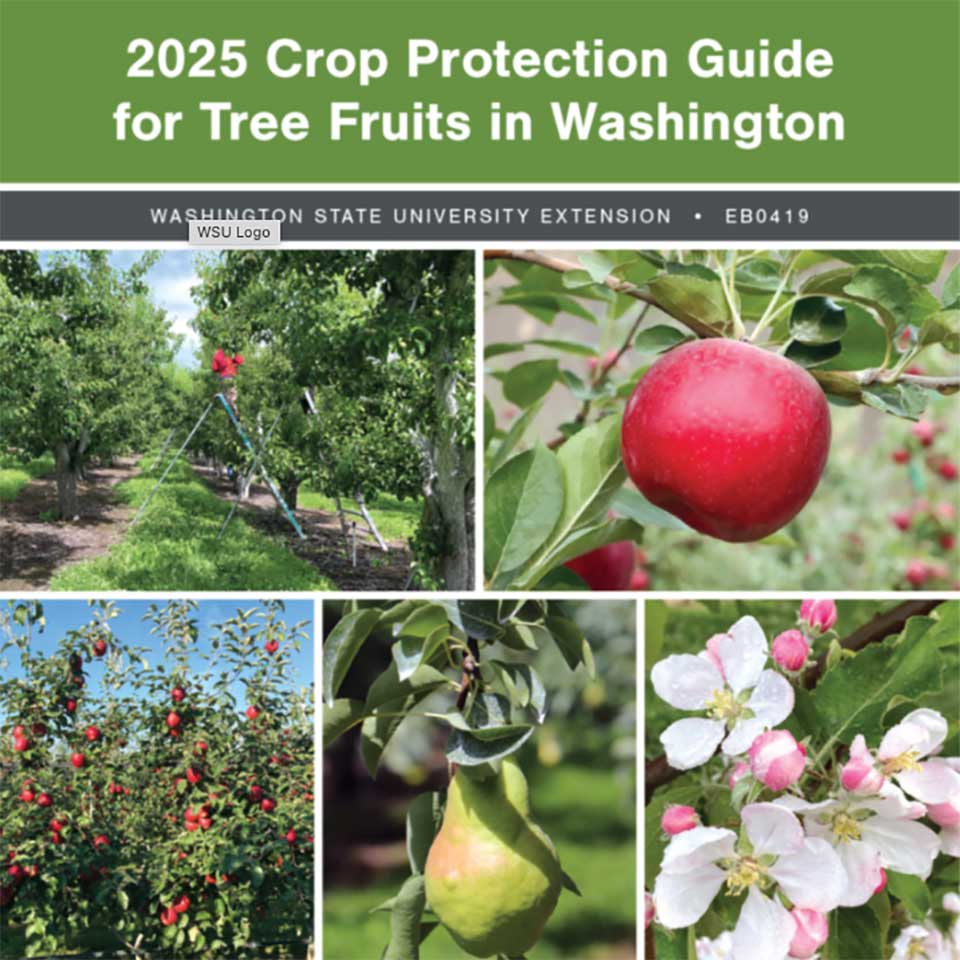
Beers and her colleagues at the WSU Wenatchee Tree Fruit Research & Extension Center and those involved in Tree Fruit Research and Extension across the state released the 2025 Crop Protection Guide for Tree Fruits in Washington. This annually revised publication presents pest management information including pesticides registered on orchard insect, disease, and weed pests in Washington State, along with efficacy and toxicity charts. It is available free online or a hard copy is available for purchase.
Additional information on key pests and management strategies is available at Beers’ Tree Fruit IPM website. Highlighted pests include brown marmorated stink bug, codling moth, and spotted wing drosophila.
PNW Growers Assist with Nationwide Vegetable Project
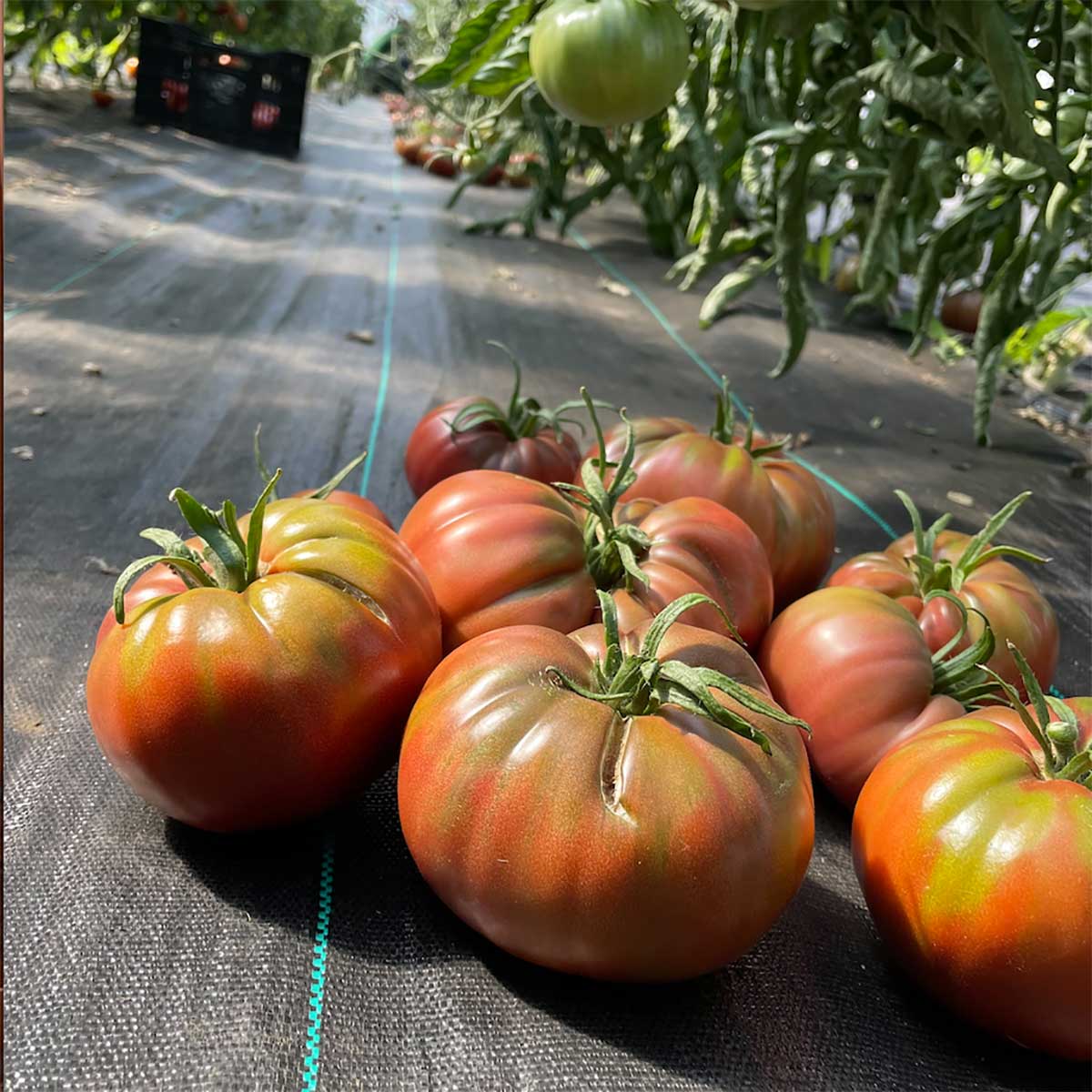
Regional Horticulture and IPM Specialist Laurel Moulton has been utilizing her relationships with farmers on the Olympic Peninsula to assist a vegetable breeder from the University of Georgia. Amol N. Nankar, with UGA’s Department of Horticulture and Institute of Plant Breeding, Genetics & Genomics, has been conducting a nationwide survey of tomato and pepper growers for his project Concept Mapping for Vegetable Breeding: Multi-Species Vegetable Needs Based Assessment Survey. In Washington, commercially produced peppers and tomatoes are typically grown in passively ventilated and heated structures known as “high tunnels.” Moulton identified and interviewed several growers.
In a classic example of academic and agricultural synergy, Moulton’s work will inform Nankar’s project, Pacific Northwest growers will help tomato and pepper farmers nationwide, and Moulton expanded her knowledge of disease pressure and abiotic disorders in high tunnel crop production. Moulton will be working closely with some of the farmers interviewed to diagnose and treat the disorders they find most problematic, such as yellow shoulders on tomatoes, sun scald, and leaf mold. If sufficient numbers of growers served by Moulton and the WSU Regional Small Farms Program express interest, classes or workshops to address these disorders in an IPM context will be organized.
Herbicide Resistance Takes Center Stage in Small Grains
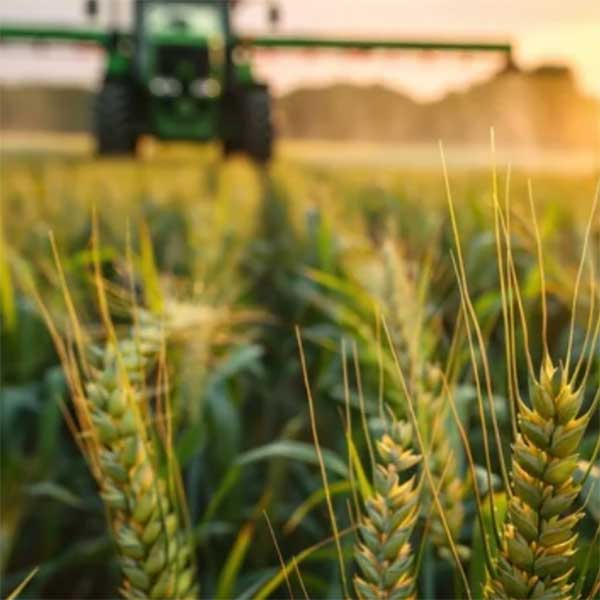
Small Grains Extension Specialist Drew Lyon continued spreading the word about the Pacific Northwest Herbicide Resistance Initiative (PNWHRI), a joint project of WSU, University of Idaho, Oregon State University, and USDA Agricultural Research Service designed to provide support for managing herbicide-resistant weeds in wheat and small grains across the region. On his WSU Wheat Beat podcast this quarter, Lyon welcomed WSU’s R.J. Cook Endowed Chair of Wheat Research to the microphone for Teamwork in the Weeds with Dr. Ian Burke, discussing the PNWHRI and other collaborative projects.
Also on Lyon’s podcast, Impacting Harvest Weed Seed Control with Drs. Casanova and Bergmann featured WSU Postdoctoral Researcher Nick Bergman and USDA Research Agricultural Engineer Joaquin Casanova sharing their on-farm research into the efficacy of impact mills for weed control at harvest.
Lyon contributed an article to the Weeders of the West blog entitled It’s Complicated: Non-target-site Herbicide Resistance, in which he contrasts the traditional approaches to herbicide resistance (“target-site” resistance) management (mode-of-action/MOA rotation, tank-mixing and/or overlapping various herbicides) with what we are beginning to learn about non-target-site resistance. While IPM tactics including cultural, mechanical, and prevention are still effective for both types of resistance, there remains much to be learned about increasingly observed non-target-site resistance.
IPM for Berry Growers, Master Gardeners, and Policy Makers
Horticultural Crop IPM Specialist Louie Nottingham spoke to audiences on both sides of the state with regard to IPM in berry crops:
- Presented on the use of selective insecticides for management of spotted wing drosophila at the Skagit Berry Workshop with approximately 40 western Washington blueberry and raspberry growers in attendance, and
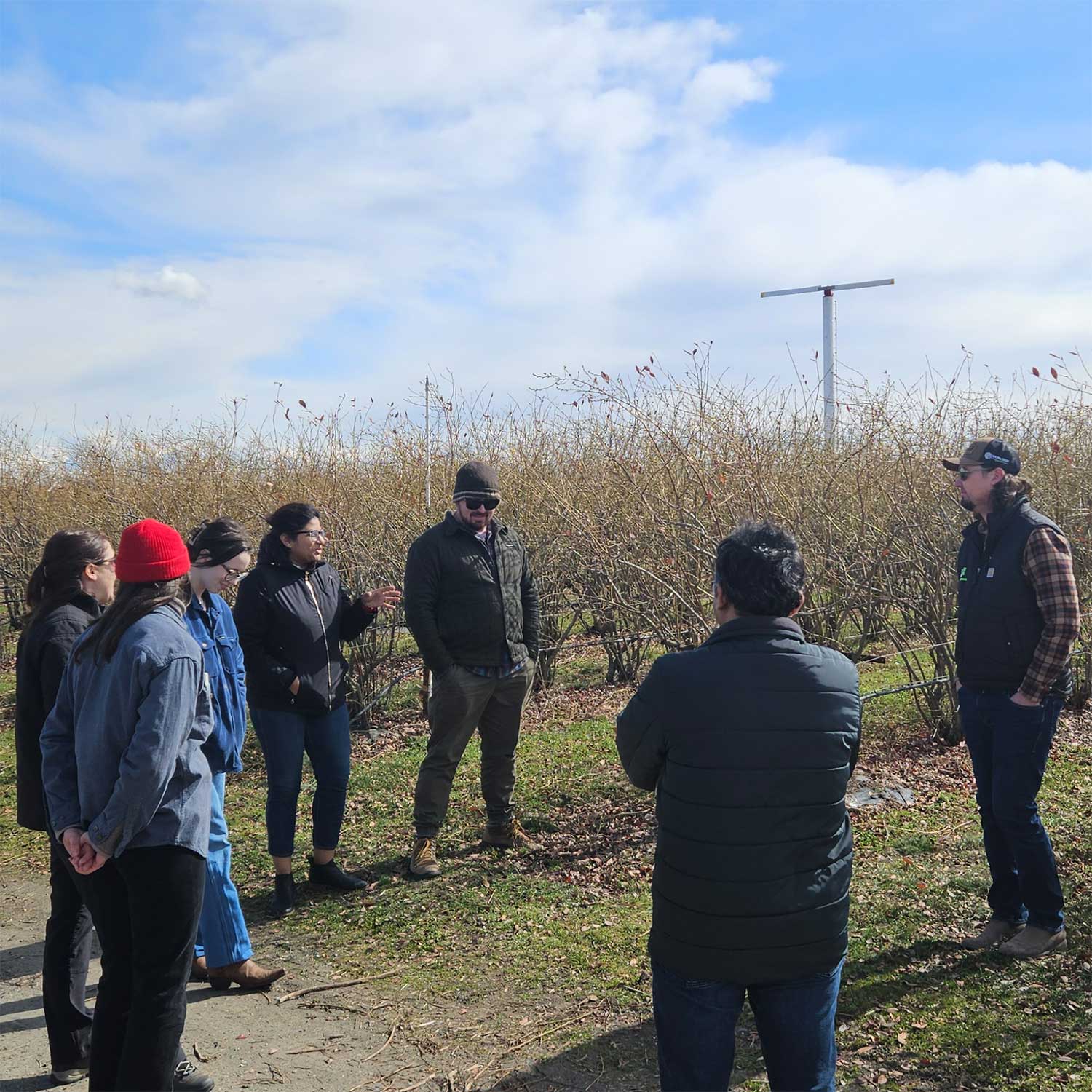
- Participated in the Eastern Washington Blueberry Commercial Field Tour which involved 10 university researcher/extension personnel visiting 6 large organic blueberry farms in southcentral Washington.
Nottingham contributed an online lecture to the IPM chapter the Master Gardener Training Handbook. WSU Extension’s Master Gardener Program addresses important sociologic and environmental issues by teaching research-based horticulture. Founded in 1973, it was the first program of its kind in the nation. Nottingham’s fellow member of the WSU Extension Integrated Pest Management Team, Jennifer Marquis, is the Statewide Program Leader for Master Gardeners (see next article).
In keeping with the broader mission of the Nottingham Entomology Lab, Nottingham attended a workshop to help policymakers improve the new Bulletins Live! Two (BLT) tool. BLT is a web-based application to access Endangered Species Protection Bulletins and display Pesticide Use Limitation Areas (PULAs) as a part of the US Environmental Protection Agency Endangered Species Act.
Washington Green School: A New Opportunity for Home Gardeners
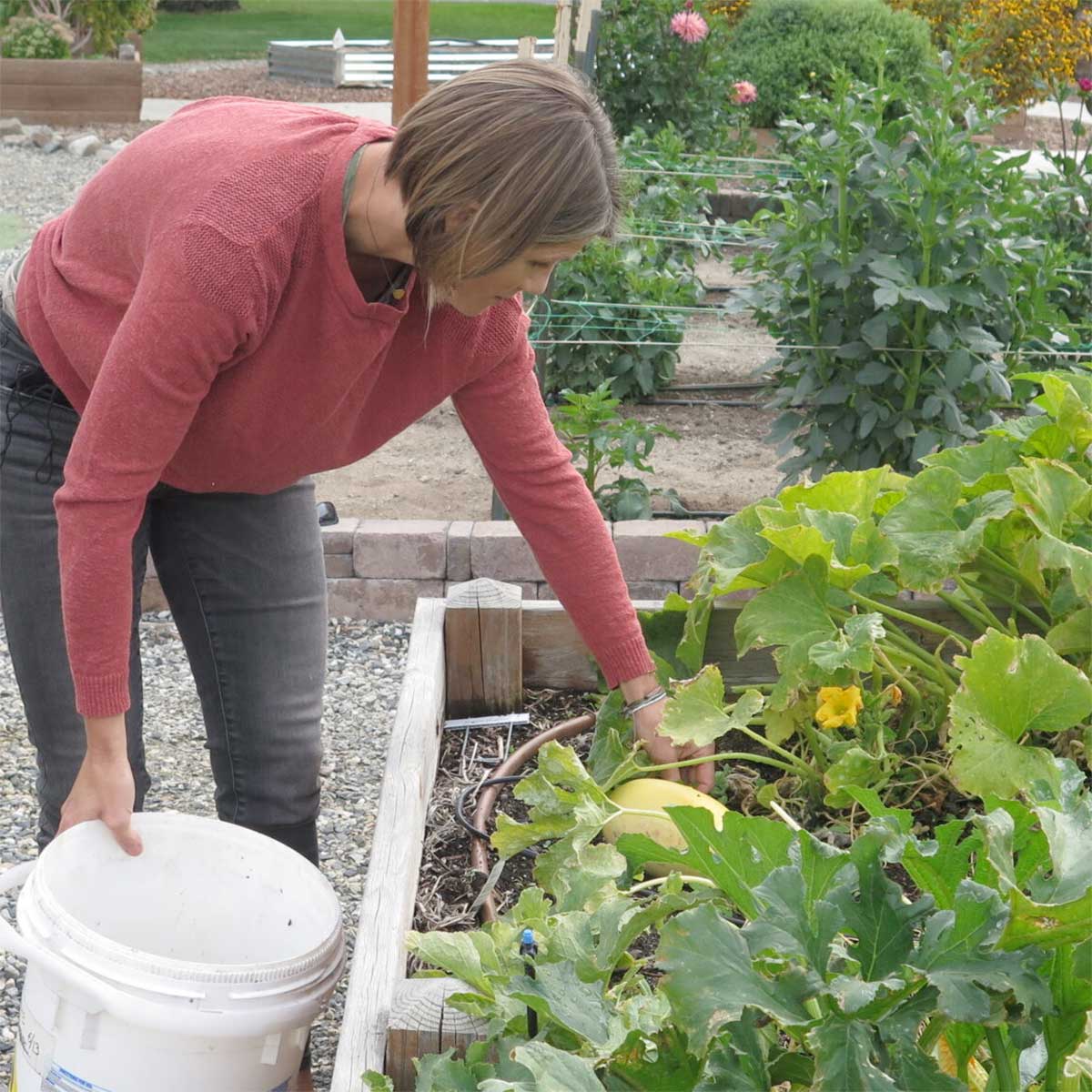
WSU Extension Master Gardener Program Director Jennifer Marquis announced the launch of a program designed to bring the extensive resources of the WSU Extension Master Gardener Program to a wider audience. The new Washington Green School is a certificate program that will offer the same basic horticulture training provided in the widely acclaimed Master Gardener program, but without the commitment to provide community service that has always been an integral component of the Master Gardener program.
Starting in October 2025, those interested in expanding their knowledge of gardening in Washington State can participate in 20 weeks of self-paced training that explores 28 topics including botany, plant identification, entomology, soils, plant problem diagnosis, and pollinators. All courses are online and each module includes the opportunity to participate in a live review hosted on Zoom. The entire curriculum has an IPM focus and is designed to empower home gardeners to create the garden of their dreams that also benefits the environment.
Registration begins on August 15, 2025.
The new program was featured in the article Aspiring gardeners, established green thumbs to benefit from new WSU Extension program by Joe Roberts in the WSU CAHNRS* News, a publication from the WSU College of Agricultural, Human, and Natural Resource Sciences.
Targeting Invasive Pests in Urban Environments with IPM
Urban IPM Specialist Todd Murray spearheaded a full slate of Urban IPM outreach this quarter.
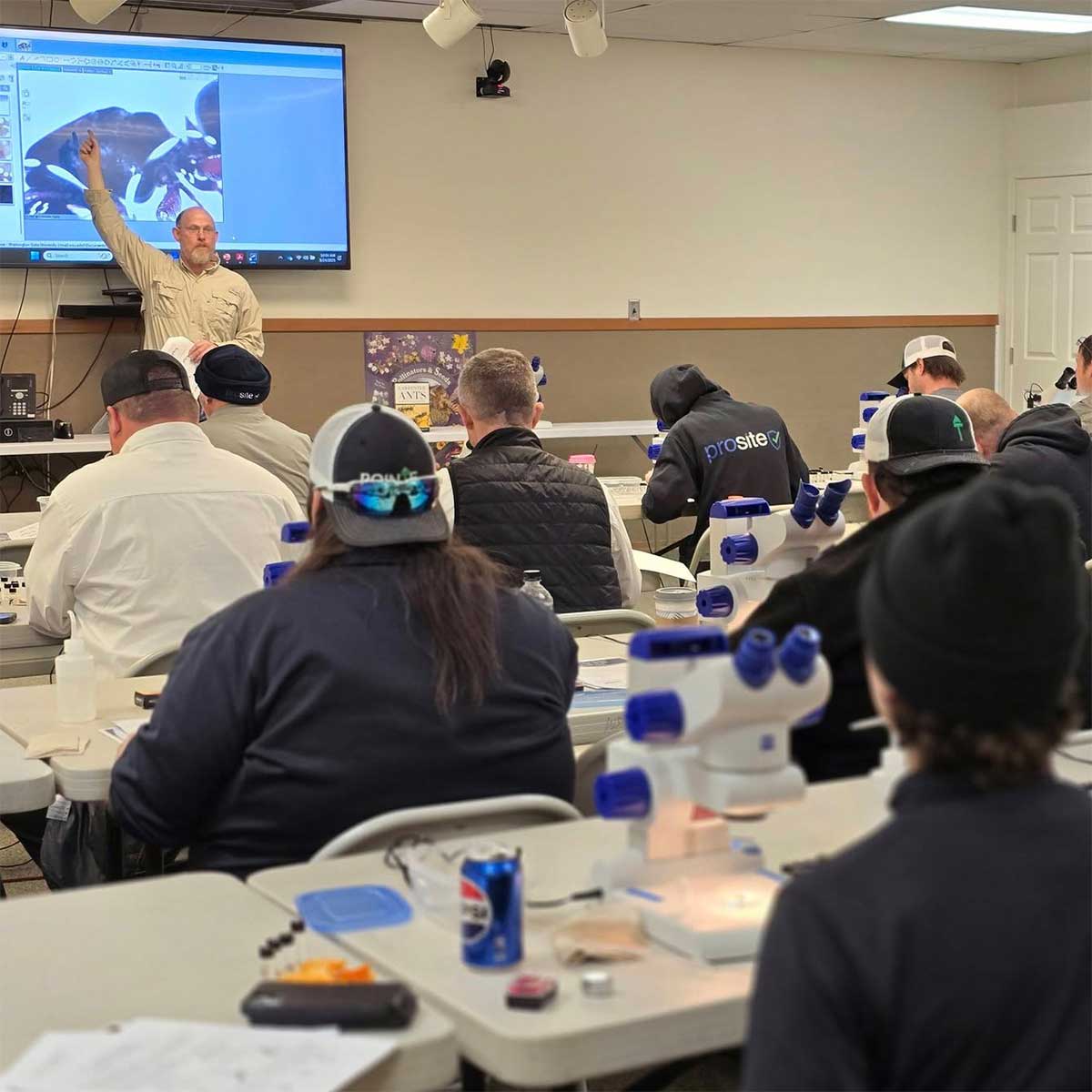
Over 1,200 licensed professionals at six pesticide license recertification trainings received first detector training about new invasive pests that occur in and around buildings in Washington State along with IPM tactics to manage them.
Over 100 Master Gardener volunteers learned about basics of IPM, early detection, and rapid response to newly introduced insect pests such as the European chafer.
In collaboration with Washington State Pest Management Association, 142 pest management professionals learned advanced techniques for ant and spider identification and discussed management techniques at six hands-on training sessions.
In collaboration with Washington State Department of Agriculture and Washington Invasive Species Council, two first detector training events (one on invasive ants and one on invasive pests of specialty crops) reached over 400 people. Murray spoke on newly introduced turf pests, stinging ants, and venomous spiders.
The urban IPM team is studying recent localized outbreaks of the California fivespined ips bark beetle and two newly documented locations of the European fire ant. Look for expanded educational outreach on these pests in the near future.
Cranberry IPM Outreach for Growers and Students
Cranberry and Shellfish Extension Specialist Laura Kraft and her team hosted a webinar for Washington and Oregon cranberry growers in January to discuss findings from the summer 2025 field season. The team reported finding an insect in a new genus that is a potential vector of false blossom, a disease that results in yield loss by causing flowers to abort. Kraft also presented this information to Pacific Northwest cranberry growers at the Cranberry School in Bandon, Oregon.
In early March, Kraft co-organized the West Coast Cranberry Congress with the British Columbia Cranberry Marketing Commission. This online webinar for growers featured several presenters and reached 65 participants.
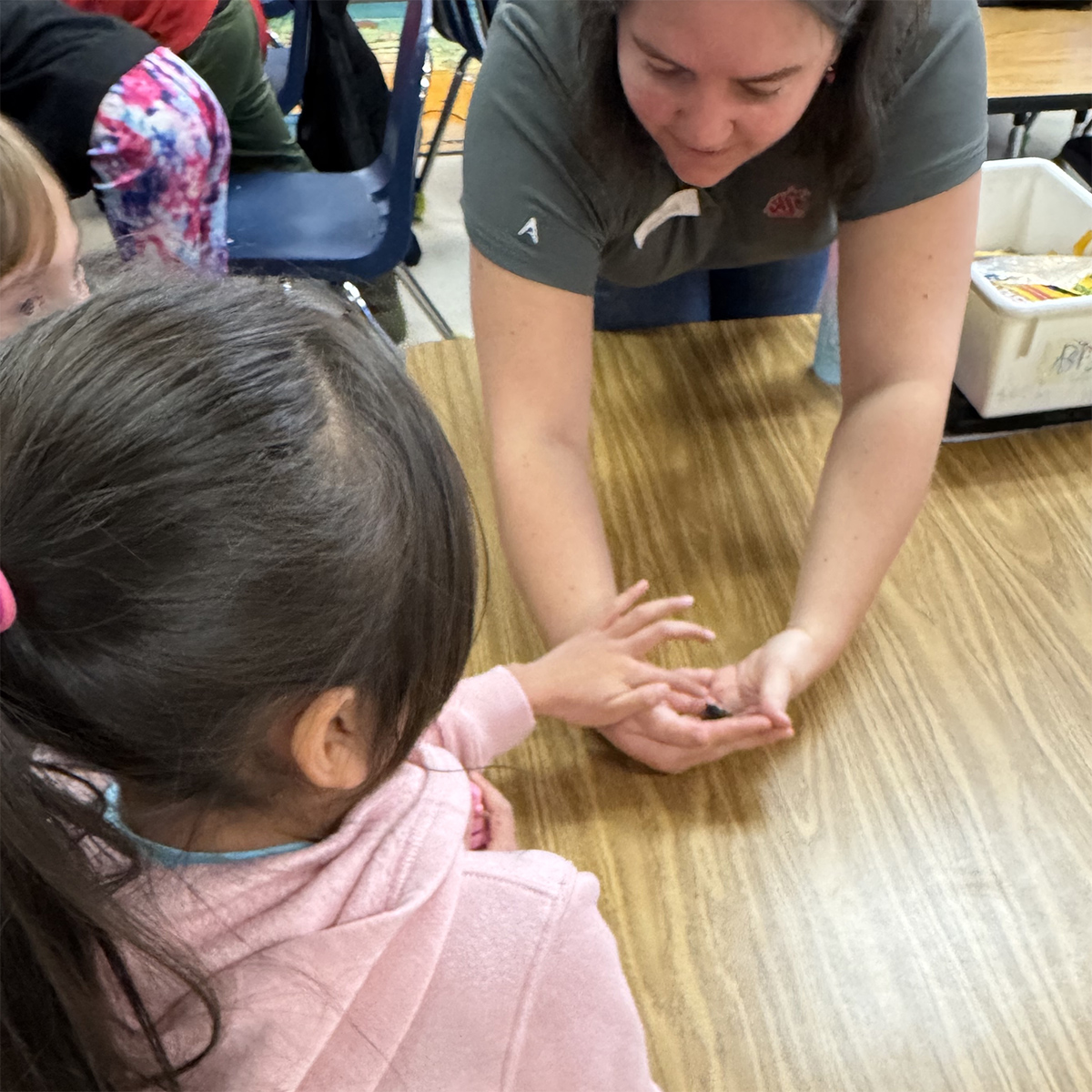
In January, Kraft and Cranberry Research Technician Lydia LaLonde brought a fun “bug meet-n-greet” to an elementary school classroom at Ocean Park Elementary School in Ocean Park.
In late February, Kraft and LaLonde met with three middle school science classes at Hilltop Middle School in Ilwaco and gave a short presentation on local careers in entomology. The team also brought sampling materials from their laboratory and taught students to search for the new insect genus using microscopes.