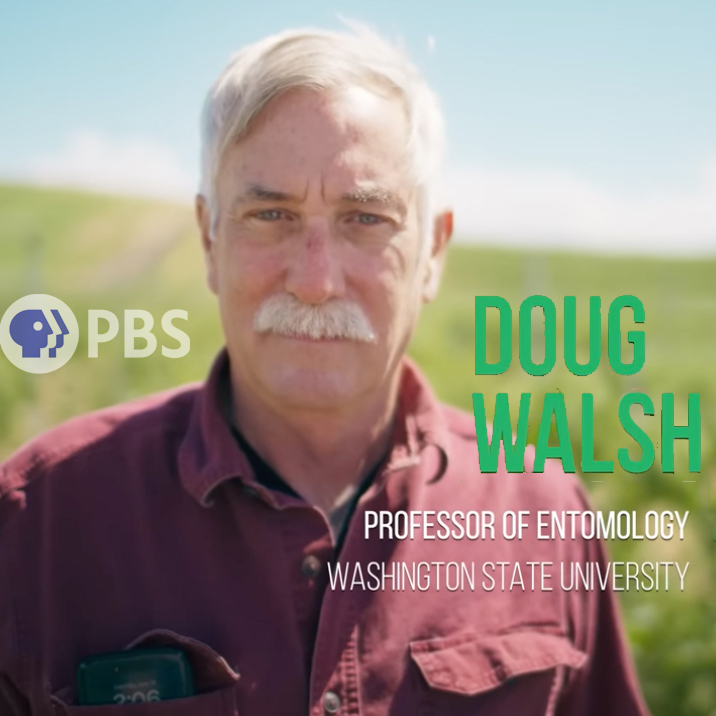
Walsh Appears on PBS and Coordinates Seminar Series
Washington State IPM Coordinator and Extension Entomologist Doug Walsh appeared on the Public Broadcasting System (PBS) series Human Footprint in an episode entitled The Honey Trap that aired in July. Walsh discussed the native pollinators of the alfalfa fields grown for seed in southeastern Washington, the only place on earth where wild, ground-nesting bees are actively managed for commercial pollination. Walsh has worked with alfalfa seed growers in southeastern Washington for decades, assisting them with integrating pest and pollinator management, including protecting their alkali bees (Nomia melanderi). In the interview, Walsh describes a project he led for the Washington State Department of Transportation to conduct research regarding traffic and bee safety that resulted in highway rerouting. The 10-minute excerpt featuring Walsh and grower Mark Wagoner, This Bee Is Worth Millions, is also available on YouTube.
Walsh and fellow WSU Extension IPM team member Brandon Hopkins coordinated the 2025 Marilyn and James Hyde Seminar Series, an annual colloquium within the WSU Department of Entomology. The series began in August and continues into December. This quarter’s presenters included (*Walsh former graduate students):
- Kelsey Graham, USDA-ARS Non Apis Pollinator Specialist, Logan, UT: Testing IPPM strategies in highbush blueberry and alfalfa seed production systems
- Claire Winslow, WSU Graduate Student, Northwestern Washington Research and Extension Center: Advancing integrated pest management programs in Western Washington small fruit
- Amber Vinchesi-Vahl*, University of New Hampshire Extension IPM Specialist, Across Crops and Coasts: Shaping an Extension Center Career in Entomology and Agriculture
- Tim Waters*, WSU Regional Vegetable IPM Specialist, Pasco, WA: Facilitating adoption of the use of scouting, treatment thresholds, and reduced risk insecticides by commercial potato farms
- Brian Bahder*, University of Florida, Planthopper Diversity on Palms in Madagascar: Discovering Species and Vectors
Articles, Blog Posts, and Podcasts for Grain Growers
Small Grains Extension Specialist Drew Lyon, his team, and colleagues contributed the following articles, blog posts, and podcasts to the WSU Wheat & Small Grains website this quarter.
Timely Topics articles relating to IPM included:
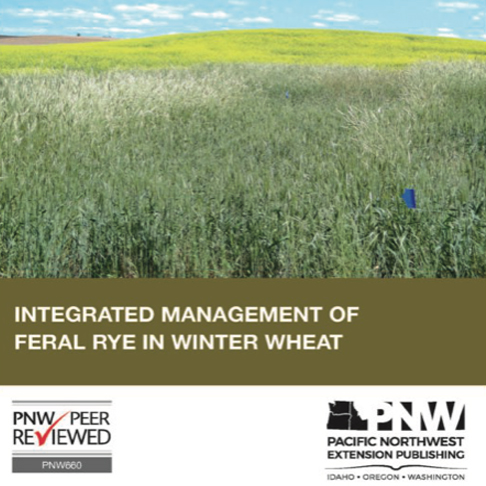
- Feral Rye Extension Publication Updated with New Information by Lyon, linking to the latest Integrated Management of Feral Rye in Winter Wheat extension bulletin
- It Is Not Powdery Mildew by Winter Wheat Breeding Program Professor Arron Carter, debunking rumors about harvest fires resulting from powdery mildew
- Determining the ROI for Precision Spray Investments by Lyon, which linked to resources including a return-on-investment (ROI) calculator from GROW (Get Rid of Weeds)
Weeders of the West blog posts included:
- Cross- and multiple-resistance in Italian ryegrass to commonly used herbicides by OSU’s Victor Ribeiro
- Exploring Electric Weed Control by OSU’s Aaron Becerra-Alvarez and Marcelo Moretti
- Weed Management Challenges in the Pacific Northwest by University of Idaho’s Doug Finkelnburg
- Annual Bluegrass Breaks Another Barrier by Moretti, Michigan State University’s Joshua Miranda, and Colorado State University’s Todd Gaines.
WSU Wheat Beat podcasts, which have been hosted by Lyon since 2017, included:
- Exploring the Evolution of Cheatgrass with WSU Weed Scientist Ian Burke
- The podcast’s final episode, in which WSU Extension Specialist Aaron Esser turned the table on the longtime host, interviewing Lyon about his initial transition from Nebraska to Washington and the impacts of his career with WSU
Recognition for Nottingham and Graduate Students
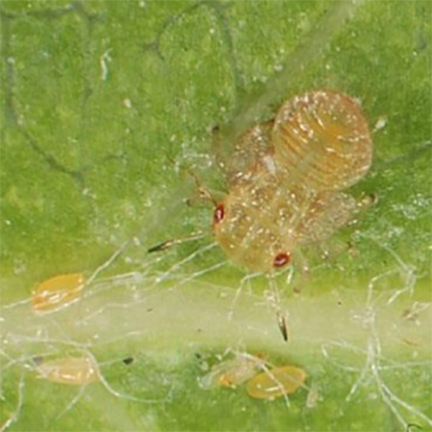
Horticultural Crop IPM Specialist Louie Nottingham and his co-authors William R. Cooper et al. won the Reviewer’s Choice Award for 2025 from the journal Environmental Entomology for their article “Bacterial Endosymbionts Identified from Leafhopper (Hemiptera: Cicadellidae) Vectors of Phytoplasmas.” The paper, published in 2023, provides a foundation for work on the interactions between leafhoppers, bacterial endosymbionts, and phytoplasma. Nice work, Louie and colleagues!
Another of Nottingham’s PhD students, Molly Sayles, was featured in the 2024-2025 Biennial Report of the WSU Center for Sustaining Agriculture and Natural Resources in September for her work on IPM adoption (or lack thereof) among pear growers. The article, Why Growers Hesitate: Molly Sayles Bridges Science and Practice, describes Sayles’ research into the often-overlooked social and human dimensions of entomology and IPM. Her research has resulted in publication of her first scientific journal article, Biology and management of pear psylla (Hemiptera: Psyllidae) in the Pacific Northwest in the Journal of Integrated Pest Management. Sayles was the primary author on the article, along with co-authors Robert J. Orpet (Oregon State University), Silas Bossert (WSU), Rebecca Schmidt-Jeffris (USDA-ARS), and Nottingham.
Urban IPM Presentations Focus on Emerging and Invasive Pests
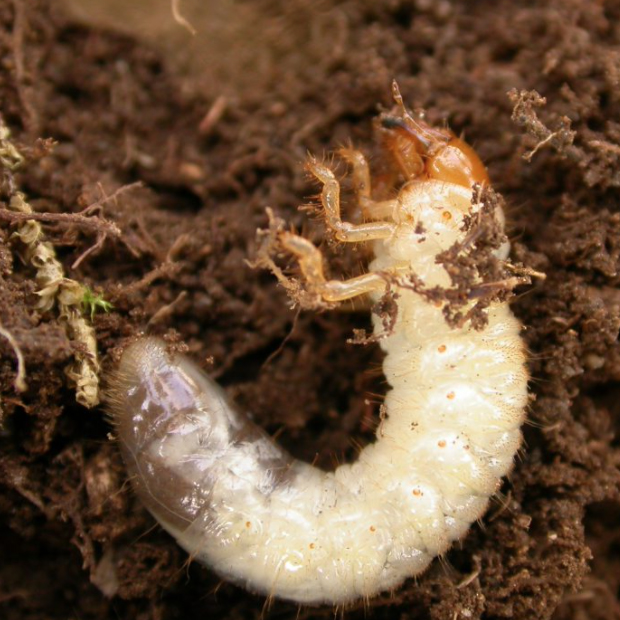
Urban IPM Specialist Todd Murray gave a live and invited presentation at the 2025 WSU Extension Master Gardener Advanced Education Conference in September. His talk, Fifty Years of Invasive Species Detection and Outreach, highlighted the role WSU Master Gardeners have played in helping to detect and respond to new pests over the past half century. Murray also discussed emerging threats like the European chafer and European fire ants, plus unwanted pests like the Asian longhorned beetle, providing guidance on management and reporting. In addition to serving as Director of the WSU Puyallup Research and Extension Center, Murray has worked with new, emerging, and invasive pests for over 25 years and is chair of the Washington Invasive Species Council.
Murray presented Emerging Insect Threats in Landscapes: What Nursery & Landscape Pros Need to Know as an online lecture to Washington State Nursery and Landscape Association members on October 2. Urban stress, climate shifts, and the arrival of invasive species are fueling new pest pressures that affect trees and ornamentals in Washington landscapes. Murray provided insights into the biology, identification, damage symptoms, and management of pests on the rise, including California fivespined ips, winter moth, bronze birch borer, and viburnum leaf beetle.
Master Gardener Conference Held and Green School Ready for Debut
WSU Extension Master Gardener Program Director Jennifer Marquis and her statewide team presented the 2025 WSU Extension Master Gardener Advanced Education Conference, sponsored by the Master Gardener Foundation of Washington State. Themed Cultivating Resilience, the conference was held September 26-27. It included both live and pre-recorded presentations on a wide range of topics including IPM-related subjects such as managing pests and diseases in your vegetable garden, attracting and protecting pollinators, and the basic tenets of integrated pest management. With over 460 registrants from Washington, Canada, and across the country, the event united a diverse group of gardening enthusiasts and experts. Three hundred sixty-nine (369) participants attended live classes over the two days, with the added benefit of recorded presentations available through February 28, 2026.
Registration for the Washington Green School closed on September 30 with just over 1,000 participants. The Green School is a program that offers the same basic horticulture training provided in the widely acclaimed Master Gardener program, but without the commitment to provide community service that has always been an integral component of the Master Gardener program. Enrolled attendees range from home gardeners interested in improving the success and sustainability of their gardens to horticulture professionals looking to sit for the Certified Horticulturalist Professional exam to people becoming WSU Extension Master Gardener volunteers. The curriculum, created by WSU faculty and staff, covers topics from basic botany and soil science to integrated pest management and pesticide use and safety, to sustainable landscape management and growing one’s own fruits and vegetables.
New Extension Publications and More for Beekeepers
Honey Bee Health Specialist Brandon Hopkins and his team have released three new WSU Extension Fact Sheets, each of which is available for free PDF download.
- Navigating the Mite Spectrum in Honey Bee Colonies: From Harmful Tropilaelaps to Harmless Counterparts. WSU authors Briana Price, Priyadarshini Chakrabarti, and Hopkins, along with Washington State Department of Agriculture Pollinator Health Coordinator Katie Buckley, introduce readers to the most impactful of the 290+ species of mites associated with honey bees.
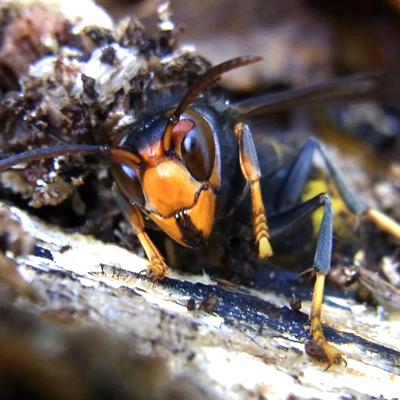
- Yellow-Legged Hornet: What Beekeepers Need to Know. Also by Price, Hopkins, and Chakrabarti, this publication provides information on the biology, behavior, and means of monitoring this invasive predator native to Southeast Asia and previously referred to as “Asian Hornet.”
- Oxalic Acid Options for Controlling Varroa destructor. Price and Hopkins teamed with University of Florida’s Cameron Jack, Assistant Professor and honey bee toxicology expert, for this step-by-step guide to the use this EPA-registered tool for managing the highly damaging Varroa destructor mite.
Price, who serves as WSU Bee Program Extension Coordinator, presented Attracting & Hosting Pollinators of the Pacific Northwest at the 2025 WSU Extension Master Gardener Advanced Education Conference in September. Attendees learned how to enhance pollinator habitats through reduced pesticide use and diverse plant selection.
Price and the bee team conducted a Fungi for Honey Bees Workshop at the WSU Puyallup Research and Extension Center on July 13. Participants in the all-day workshop learned about relationships between bees and fungi, effects of mycelium extracts on honey bee health, and entomopathogenic fungi.
Onion and Potato Outreach in the Columbia Basin
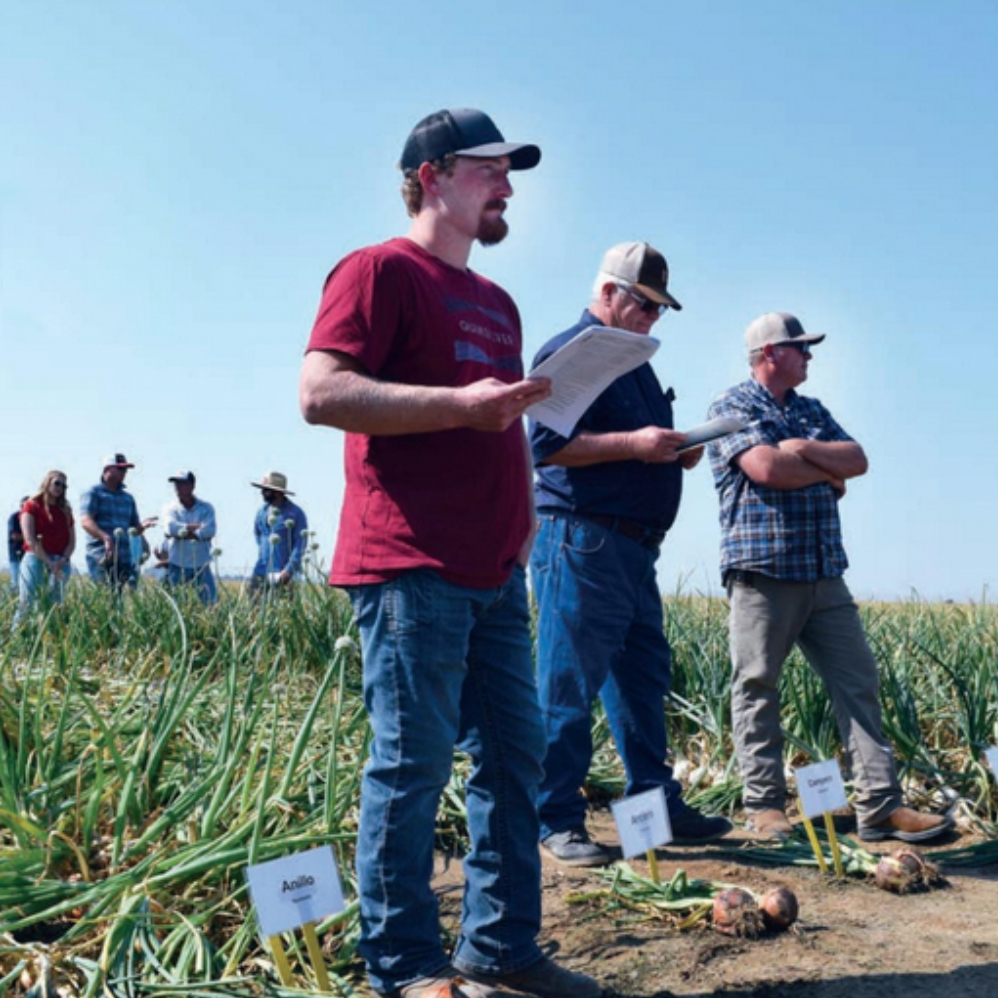
Regional Vegetable Specialist Tim Waters and colleagues presented the 2025 WSU Extension Onion Field Day on August 28. Held at the site of the 2025 Onion Cultivar Trial near Bruce, WA, this was the 40th anniversary of onion cultivar evaluations by WSU. Participants gathered in a drip-irrigated onion field managed by Weyns Farms to examine nearly 50 trial entries and listen to presentations by WSU researchers.
Waters and colleagues released 5 editions of WSU Onion Alerts in the 3rd quarter, addressing a variety of onion maladies and management methods, including a warning about tank mixes promoting phytotoxicity in the extra hot and dry conditions in the Columbia Basin from late July to mid-August. A special issue devoted to downy mildew was released in July, with topics including favorable weather, scouting and reporting, DM’s causal agent, symptoms and signs, secondary infections, and a management overview, plus a section on foliar fungicides. Other diseases addressed included powdery mildew and black mold.
Fourteen editions of WSU Potato Alerts were released this quarter. Pests discussed included beet leafhopper, Colorado potato beetle, green peach aphid, late blight, Lygus bug, potato psyllid, potato tuberworm, root knot nematode, soft rot, spider mite, stink bug, and yellow nutsedge. Other topics included wildfires and smoke in the Columbia Basin, and use of the Potato Decision Aid System (DAS).
IPM Outreach to Growers of Sweetpotatoes and Other Veggies
Regional Horticulture and IPM Specialist Laurel Moulton presented IPM in the Veggie Garden: Growing great vegetables with environmental protection in mind at the 2025 WSU Extension Master Gardener Advanced Education Conference in September. Her talk explored strategies for growing healthy vegetables while fostering a resilient and environmentally friendly garden, combining biological, cultural, physical, and chemical methods to minimize pesticide use.
Moulton took part in the 3rd Annual Sweetpotato Field Day in September at the WSU Northwestern Washington Research and Extension Center in Mount Vernon. The event allowed participants to see common commercial varieties, purple-flesh varieties, varieties with more bush-like growth for better weed management, wireworm resistant varieties, and unreleased breeding lines from the USDA sweetpotato program.
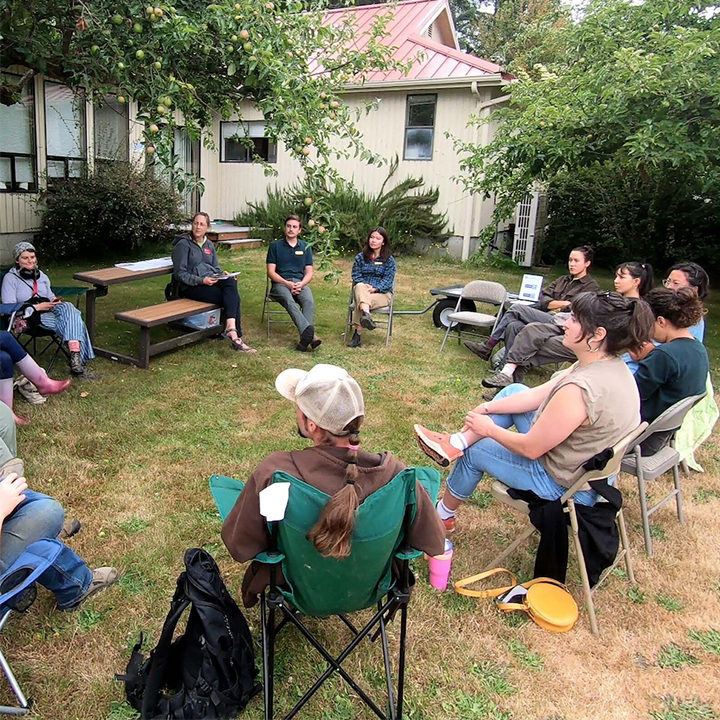
At the Kitsap County Farm Mentor Program IPM Round Table, Moulton and colleagues educated farm interns about concepts and implementation of integrated pest management. Attendees had the opportunity to bring pest, disease, and weed questions from their host farms for discussion and feedback.
Throughout the quarter, Moulton responded to Farmer Technical Assistance Requests with farm visits addressing topics including: yellow rust on raspberries; white mold; blossom-end rot and nutrient-related disorders in high-tunnel-grown tomatoes and cucumbers; and bird damage on romaine lettuce.
Cranberry Growers Field Day and Workshop
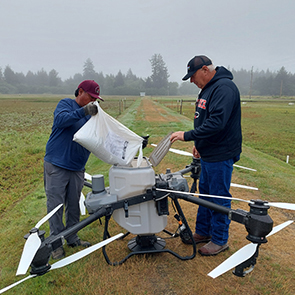
Cranberry and Shellfish Extension Specialist Laura Kraft organized and conducted the 2025 Cranberry Summit Field Day in July. The all-day event included cranberry research updates from regional experts and was targeted to Washington, Oregon, and Canadian cranberry growers. Field activities included a demonstration of fertilizer application to cranberry beds via drone. The event was hosted by the Pacific Coast Cranberry Research Foundation and took place in Long Beach, WA the home of the WSU Long Beach Research and Extension Unit.
WSU’s cranberry group also co-hosted a workshop with the Oregon Cranberry Growers Association and Oregon State University. Working with OSU’s Cassie Bouska, Kraft and her team instructed cranberry growers and field managers on recognition and management of false blossom disease and on the biology, life cycle, and scouting of its vector, the blunt nose leafhopper, the presence of which can be assessed using yellow sticky cards. The workshop took place in Bandon, OR in late July.
Codling Moth Drape Nets Scrutinized at Tree Fruit Field Day
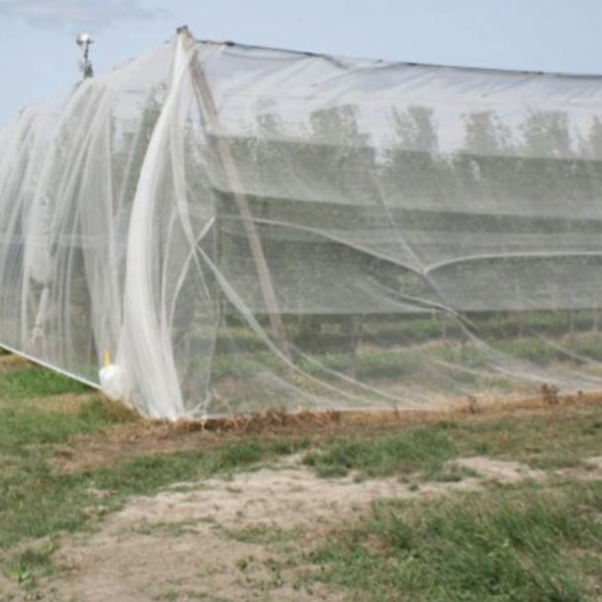
Tree Fruit IPM Extension Specialist Betsy Beers took part in the WSU-USDA Sunrise Research Farm Field Day on July 24. The annual event is designed to build awareness of the research WSU and USDA are conducting to improve production, profits, and sustainability of the area’s tree fruit farms and communities. This year, grower/stakeholder participants rotated through 6 stations for greater interaction and hands-on opportunities. The Beers Lab station demonstrated a trial exploring different approaches to mitigate non-target effects of drape nets on secondary pests. Codling moth are known to be well controlled with these nets, but growers have experienced unexpected impacts on other pests, especially woolly apple aphid. The Field Day was covered in Capital Press newspaper and Good Fruit Grower magazine.
For more information about the Beers laboratory, visit its Tree Fruit IPM website or follow them on X / Twitter @BeersLab. The website features research presentations and some amazing entomological videos.
Field Day, Journal Article, and Newsletter for Grape Growers
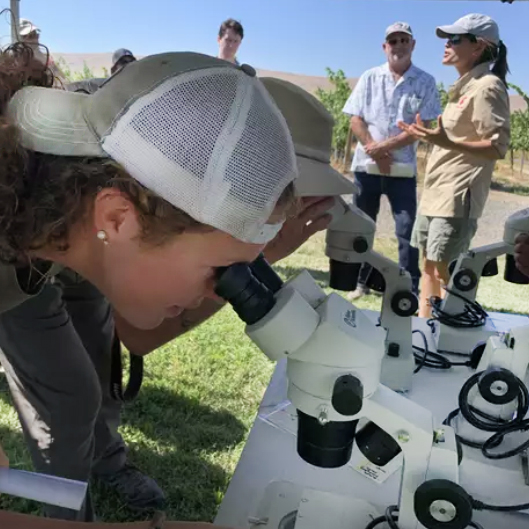
Statewide Viticulture Specialist Michelle Moyer organized the Washington Viticulture Field Day in July. Co-hosted by the Washington State Grape Society and WSU Viticulture Extension, the half-day event focused on management of grafted vines and rootstocks for soil-borne pest control, as well as grape mealybug mating disruption, monitoring for grape mealybug, and new sensor technologies that can improve spray applications. Moyer discussed the differences between mating disruption and monitoring, and demonstrated how to identify male mealybugs in pheromone traps.
Moyer’s former PhD student Bernadette Gagnier won a Best Student Paper Award from the journal Plant Health Progress for her paper Impact of Vineyard Fallow Practices on Reducing Meloidogyne hapla Population Densities. Published in September and building upon research described in her doctoral dissertation, the article explains how a fallow period could be useful as a nonchemical management tool for M. hapla in vineyard replant soils in combination with other site management factors. Moyer and USDA-ARS nematologist Inga Zasada were co-authors.
Viticulture & Enology Extension News Fall 2025 Edition is now online. Moyer edits this twice-yearly publication. This edition includes:
- Vineyard Idling – Part 1 – Winter Activities by Moyer and co-author Markus Keller, Distinguished Professor in Viticulture at WSU
- Sustainable By Nature, an overview of the Sustainable WA certification program byMelissa Hansen, Research Program Director of the Washington State Wine Commission
- WineVit 2026: A Reimagined Event for the Washington Wine Industry, a preview of the February event “Where Washington Wine Comes Together to Grow”