
Vegetable Education for Kids and Farmers
Regional Vegetable Specialist Tim Waters was featured on the Ask Dr. Universe podcast on December 5. The episode, Meet an Extension Vegetable Specialist, was part of the How Do You Science series. In it, Waters provides a brief history and explanation of Extension and talks about his own research and extension activities in the Columbia Basin, his path from community college student to PhD, and even his favorite insect, the giant Belostoma water bug. The Ask Dr. Universe podcast has been answering science questions from kids around the world since 2020. Kids can submit questions at askdruniverse.wsu.edu.
Waters also worked with grownups this quarter. In November, he presented Thrips Management in Onions, Wireworm Control in Vegetable Crops, and Japanese Beetle and Other White Grubs: Potential for Disaster at the Annual Conference and Trade Show of the Pacific Northwest Vegetable Association in Kennewick.
With colleagues Carrie Wohleb and Lindsay du Toit, Waters released the fifth edition of Onion Alerts newsletter in October. Also this quarter, the onion team released the 2025 Columbia Basin Onion Cultivar Demonstration Results. Nearly 50 onion cultivars were planted in spring 2025 then harvested and evaluated for yield and characteristics including size, maturity, and disease incidence.

Happy Retirement, Drew Lyon!
The Washington State University Integrated Pest Management Extension Team wishes to recognize longtime team member Drew Lyon for his many contributions to integrated weed management extension. Small Grains Extension Specialist Lyon retired in December 2025 after decades of serving growers throughout the West.
Lyon joined State IPM Coordinator and Extension Entomologist Doug Walsh in successfully applying for federal funding for IPM extension activities in 2014. Year after year thereafter, through multiple funding cycles, Walsh’s WSU IPM team always included Drew Lyon in its IPM Extension Outreach for Agronomic Crops.
Lyon conducted a robust, multi-model IPM outreach program throughout his time at WSU. He hosted the WSU Wheat Beat podcast, was a frequent contributor to the Weeders of the West blog and Timely Topics articles on the WSU Wheat and Small Grains website, was a driving force behind the annual WSU Wheat Academy, and co-authored many integrated weed management Extension publications. In his typically enthusiastic manner, he posted It’s Getting Exciting Again! on the weed blog in October, announcing his retirement, highlighting recent advances in weed science, and looking toward the future.
From all of us, Drew, thank you for your years of service to the state, the region, and the WSU Extension IPM Team.
Talks Around the State Focus on Codling Moth IPM
Talks Around the State Focus on Codling Moth IPM
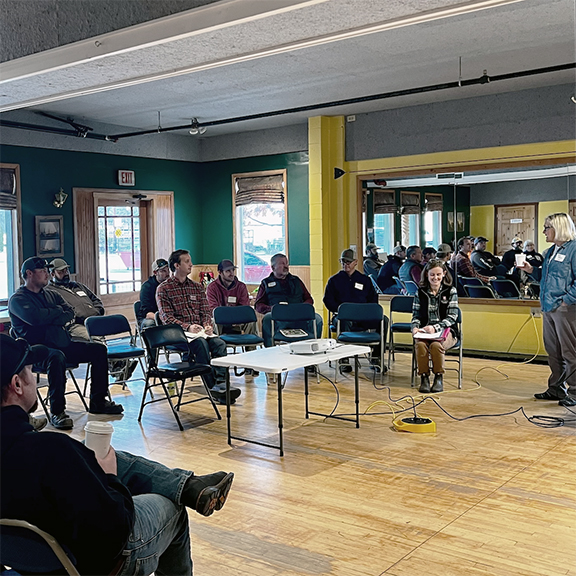
Tree Fruit IPM Extension Specialist Betsy Beers met with orchardists, consultants, and field agents around the state this quarter. Many of these presentations and discussions focused on codling moth (CM), a perennial pest of apple and pear in the Pacific Northwest. Beers is a founding member of the multi-state Codling Moth Task Force. Colleague Tobin Northfield is the current head of the task force.
- On 10 October, Beers met with field agents in Tonasket, WA to address the uptick in Pest Board cases of CM. The session, as well the one on 20 November, were organized by Tree Fruit Extension Specialist Tianna DuPont.
- On 18 November, Beers attended Codling Moth Task Force meeting in Yakima, WA, for an update on chemical control options for CM.
- On 20 November, it was back to Tonasket to lead a discussion group to set priorities for addressing unsprayed or inadequately sprayed orchards. Termed “idle orchards” by Northfield, they are of concern due to their propensity for generating problematic amounts of CM for neighbors with active orchards.
- On 10 December: Beers presented Managing Apple Pests in Lean Times: Taking Care of the “Core” of Your Program at the annual meeting of the Washington State Tree Fruit Association.

Podcast Episode Focuses on Climate Impacts on Pests
Urban IPM Specialist Todd Murray was a guest on The Evergreen Thumb, a podcast for home gardeners, in October. The podcast is produced by WSU Master Gardener Program and the Master Gardener Foundation of Washington State. It features horticulturists, Master Gardeners, and plant enthusiasts sharing their wisdom, practical tips, and hands-on experiences. Topics range from plant selection and care, sustainable gardening practices, and organic pest control, to landscaping design and tackling common challenges specific to the Pacific Northwest.
Murray joined host Erin Hoover to discuss How Climate Shifts Are Changing Our Pest Problems. In the 35-minute podcast, Murray explained how climate change is affecting plants through shifting weather patterns, making them more vulnerable to both native and non-native pests, and how gardeners can adapt to these changes. Murray gave examples of pests whose geographic range is expanding, ones who complete additional generations, and ones who become more pestiferous to their hosts because of host plant adaptation to climate change, all related to changes in temperature and moisture conditions.
Murray has over 25 years of experience working with new, emerging, and invasive pests is currently chair of the Washington Invasive Species Council.
Green School Launches with 1,000 Registrants
WSU Extension Master Gardener Program Director Jennifer Marquis and her statewide team launched Washington Green School in October. More than 1,000 individuals registered to learn research-based techniques to create a thriving garden that also benefits our environment. Learners ranged from current and aspiring Extension Master Gardener volunteers and community members who want to learn more about horticulture, to green industry professionals preparing to sit for the Certified Professional Horticulture exam or simply improve their knowledge and skills.
Green School covers all aspects of horticulture and its benefits across economies, environments, and individuals, families and communities. Curriculum includes botany, entomology, soils, growing food, pollinators and pollination, and integrated pest management.
Green School IPM Instructor Laurel Moulton (see article following) facilitated a Live Review Question and Answer Session for 320 learners on November 19 and 20, which was subsequently viewed by approximately 250 others. Key takeaways included:
- Most helpful concepts were: IPM framework, pesticide labels and risk, and the disease triangle.
- Most difficult to understand were chemical and technical concepts such as mode-of-action and systemic vs. translocating pesticides
- Most interesting topics were the philosophy of IPM as a comprehensive, multi-step process and understanding the pesticide label as a contract.
New Handbook and More Tools for Home Gardeners
Regional Horticulture and IPM Specialist Laurel Moulton has been a key participant in the preparation and launch of the Washington Green School (WGS, see preceding article).
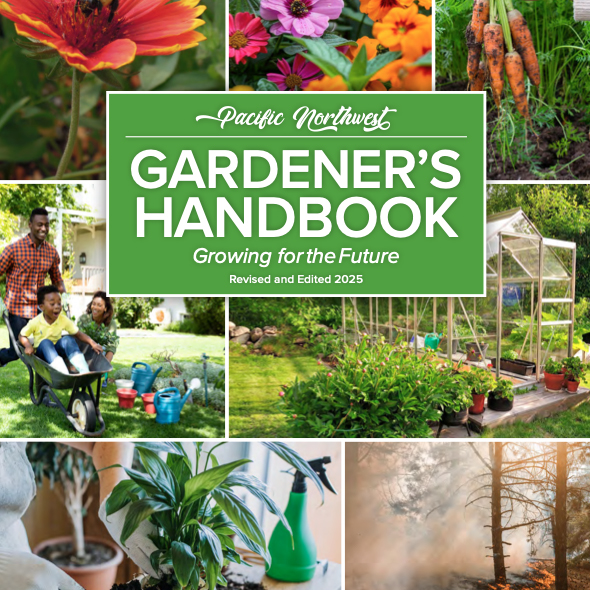
Moulton, along with WSU Plant Diagnostician Jenny Glass, revised two chapters of the new Master Gardener training manual, now called the Pacific Northwest Gardeners Handbook. The revised 620-page, full-color publication is the official textbook for WGS. It is available to the public as a free PDF download.
Moulton was the IPM topic expert for the two live statewide review and Q & A sessions offered to WGS participants for the IPM and Pesticide Safety module. She was joined by Wendy Sue Wheeler, Director of the WSU Pesticide Resources and Education Program, who served as the pesticide safety expert. Moulton and Wheeler reviewed important concepts from WGS participants’ reading then answered questions. Moulton’s review emphasized the importance of using an IPM approach in managing plant problems. She used an illustration of the “disease triangle” to demonstrate that IPM management tools should target one of the three “legs” (host, pathogen, environment) that determine whether a pest problem occurs, and at what intensity. Based on students’ response to this alternate way of explaining plant problem management, Moulton is working on a hands-on activity to include in future training.
Conference Presentations Keep the Bee Team Buzzing
Honey Bee Health Specialist Brandon Hopkins made conference presentations across the nation about potentiality of ozone for stored honey bee comb sterilization and current research on a new APIX Biosciences pollen-replacing diet. Venues included the California State Beekeepers Association Convention in Temecula CA, American Honey Producers Association conference in Tampa FL, and the Idaho Honey Industry Association conference in Boise ID.
This quarter, Hopkins and his colleagues in the WSU Bee Program reached 600+ people through 15 events (webinars, in person presentations, and podcast episodes) about diagnostics on a microsporidian gut parasite Nosema, entomopathogenic Metarhizium fungi for Varroa control, small hive beetles as an emerging pest in Washington State, ways to support pollinator habitats, and beginner beekeeper basics.
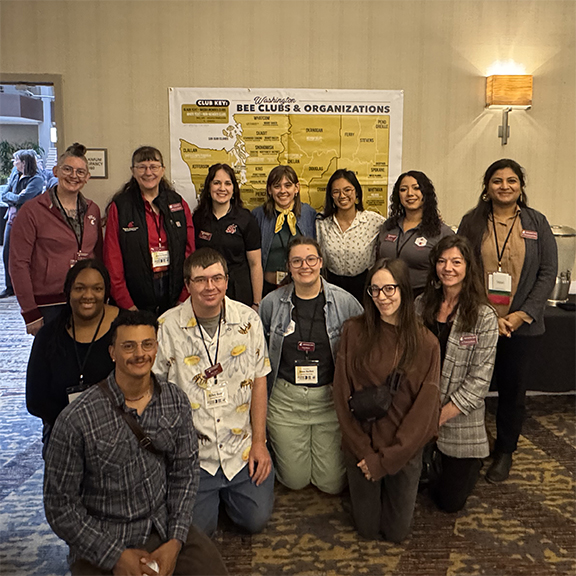
Bee team members and graduate students attended the Annual WASBA Pacific Northwest Beekeeping Conference in Lynnwood WA, where their presentations included Metarhizium for Varroa control and use of environmental DNA to detect honey bee pests.
Leveraging information gained from outreach this year, Hopkins and Education and Outreach Coordinator Bri Price sought and were awarded a WSDA Specialty Crop Block Grant to address gaps in resource materials that impact adoption of effective Varroa control through creation of a video series on holistic integrated Varroa management.
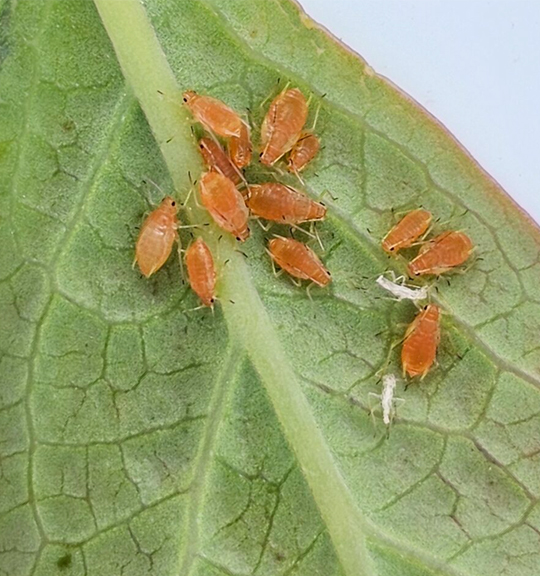
SWD and Aphid Management Options in Small Fruits
Horticultural Crop IPM Specialist Louie Nottingham presented at the Lynden Ag Show / Washington Small Fruit Conference in December. Nottingham was a co-leader of the Disease, Weed and SWD (Spotted Wing Drosophila) Management section and one of its subsections, Reducing Pressure from Spotted Wing Drosophila with Sterile Insect Release (SIR). SIR has been a highly effective method for pest management in other commodities, including cotton (pink bollworm), apples (codling moth), and livestock (screwworm). A method to mass produce sterile male SWD has been developed, and the WSU Mount Vernon Entomology Lab performed three field releases in 2025 to determine potential efficacy. Results and future directions for this line of research were discussed. SWD is the top pest of Washington’s blueberry and red raspberry industries in northwestern Washington. Both crops rely heavily on broad spectrum insecticides and spinosad to manage SWD, but alternatives are needed to provide resilience against changes in pesticide availability and to manage pesticide resistance.
Claire Winslow, a PhD Student in the Nottingham Entomology Lab, also presented at the event. Her topics included Exploring Selective Chemistries for Spotted Wing Drosophila Management (poster) and Management of Blueberry Aphids Using Surround WP (kaolin clay) and Potential Non-target Effects (oral presentation).
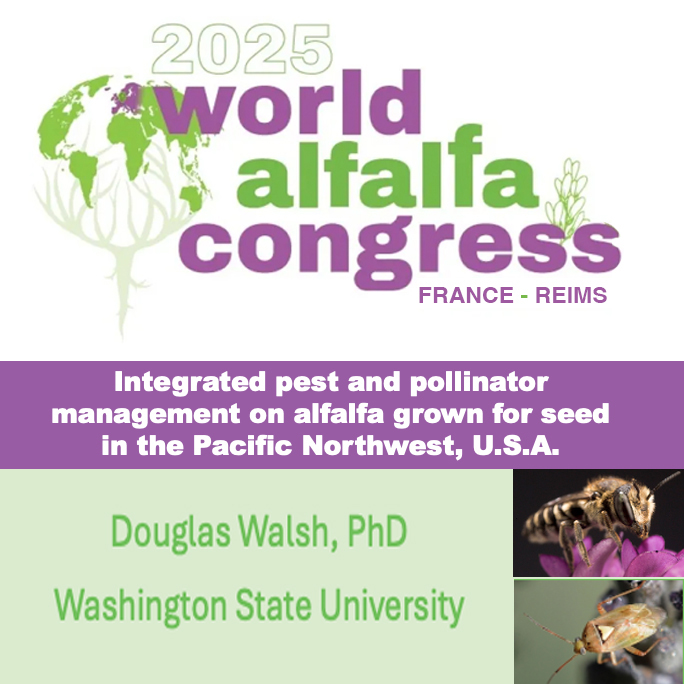
Alfalfa Seed IPM Presentations and Seminar Series
Washington State IPM Coordinator and Extension Entomologist Doug Walsh was invited to present at the World Alfalfa Congress in Reims, France in November. Walsh’s presentation, Integrated Pest and Pollinator Management on Alfalfa Grown for Seed in the Pacific Northwest, U.S.A., highlighted his decades of work in this cropping system and was part of a session entitled Growing Alfalfa to Increase Biodiversity and Benefit Crop Production.
Walsh also presented his alfalfa seed IPM work as part of the 2025 Marilyn and James Hyde Seminar Series. This fall’s series was coordinated by Walsh and fellow WSU Extension IPM team member Brandon Hopkins. The series, an annual colloquium within the WSU Department of Entomology, began in August and continued into December. Other presenters this quarter included:
- César Reyes Corral, Searching for Biological Control Agents for Leafhoppers and Codling Moth
- Anna Webb, USDA Forest Service, Intro to Forest Health Protection & Forest Entomology
- Andony Melathopoulos, Oregon State University, Right Plant, Right Bee: Matching bees to flowering plants with data from the Bee Atlas
- Mckaela Hobday, WSU Honey Bee Program PhD Student, Exploring the causative factors of European foulbrood across institutions [pdf]
- Fiona Goggin, University of Arkansas, Integrating Metabolism and Immunity: Plant Responses to Aphids and Nematodes [pdf]
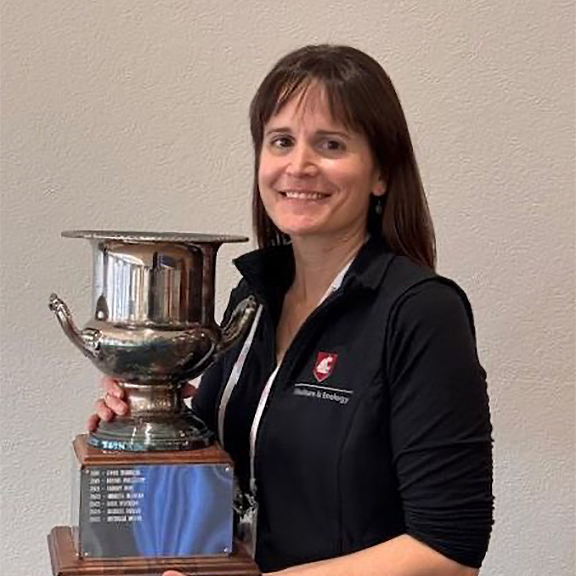
Moyer Wins Award and Introduces New Vineyard Tools
Statewide Viticulture Specialist Michelle Moyer received the Walter J. Clore Award from the Washington State Grape Society (WSGS) in November. The award recognizes “exceptional contribution to the industry” as well as active participation in WSGS and community service. Congratulations, Michelle!
Moyer, along with WSU Regional Extension Specialist Gwen Hoheisel, presented Introducing a Digital Crop Protection Guide and Grape Decision Aid System at the WSGS meeting. The digital Crop Protection Guide is the new and improved Pest Management Guide for Grapes (formerly a print publication that was updated annually) and will launch in Spring 2026. The Grape DAS is an online tool to help time pest management decisions using information from AgWeatherNet and the new digital guide. Together, these tools make the vast repository of WSU’s grape pest information available in an easily accessed, easily updated manner. Trainings on the DAS will be held this winter and spring.
Internationally, Moyer made one of the Keynote Presentations at the American Society for Enology and Viticulture–Japan Chapter in November. The conference, the 40th anniversary of this event, took place in Yamanashi, Kofu, Japan. Moyer’s talk was entitled, Dialing In Disease Management: How Weather and Vine Development Impacts Molds and Molds. The trip included numerous vineyard site visits.